The bilingual time tax on every Closing Disclosure
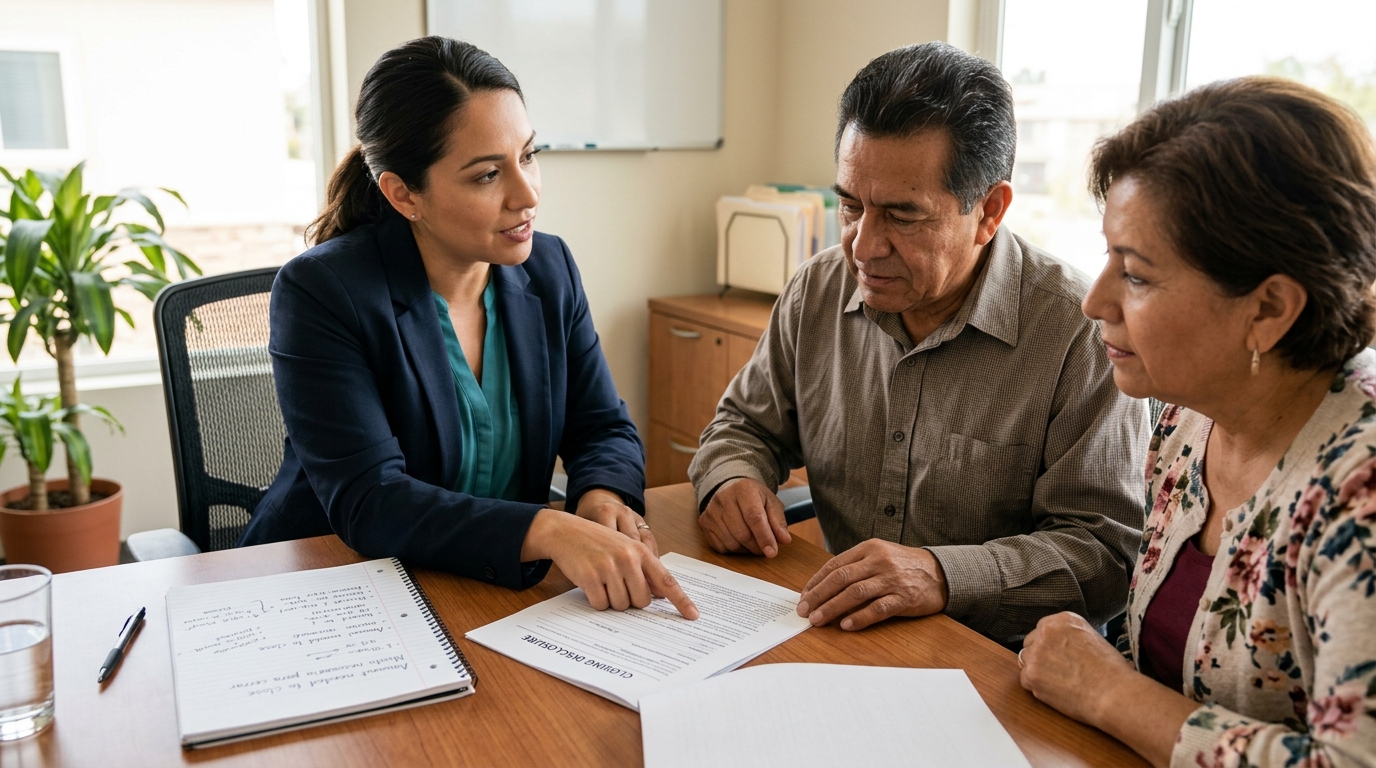
An English-only CD walkthrough takes most agents 15 to 20 minutes. You point to the numbers, the buyer nods, you move on. For bilingual agents explaining the same document to Spanish-speaking buyers, that same walkthrough stretches to 45 to 90 minutes — per deal.
The gap isn't about the buyer being slow. It's about the document. The Closing Disclosure is a CFPB-mandated form governed by the TILA-RESPA Integrated Disclosure rule (TRID). It was designed for English-language comprehension. When you translate it verbally into Spanish, five sections consistently break because the underlying concepts don't have clean equivalents.
During summer volume, that 30- to 70-minute delta per deal adds up fast. An agent closing eight deals a month is spending an extra four to nine hours just on CD walkthroughs — hours that come directly out of prospecting, showing, or sleep. That's the bilingual time tax, and it's invisible until you measure it.
Five CD concepts that fail under direct translation
The core problem isn't vocabulary — it's that certain U.S. financial structures don't exist in most Latin American mortgage systems. Swapping an English word for a Spanish word gives the buyer a false sense of understanding. These five sections need contextual framing, not word substitution. We've written more about this verbal explanation layer in our breakdown of how bilingual deal documents actually require a spoken context layer.
| CD Section | Common Translation | Why It Fails | What to Say Instead |
|---|---|---|---|
| APR vs. interest rate | "Tasa de interés" for both | Buyers think APR is their monthly rate. They see a higher number and panic. | Frame APR as "el costo total del préstamo expresado como porcentaje" — the total cost of the loan as a percentage, including fees. Their monthly payment is based on the interest rate, not the APR. |
| Escrow / impound account | "Fideicomiso" | Fideicomiso in Latin America means a legal trust entity, not a monthly payment reserve. Completely different concept. | Describe it as "una cuenta de reserva que el banco maneja para pagar sus impuestos y seguro" — a reserve account the bank manages to pay their taxes and insurance. Avoid the word fideicomiso entirely. |
| Prorations | "Prorrateo" | The word translates, but the concept of splitting mid-cycle costs between buyer and seller at closing is unfamiliar to most first-time buyers from Latin America. | Walk through a concrete example: "Si el vendedor ya pagó impuestos hasta diciembre, usted le reembolsa los meses que le quedan." Use real dollar amounts from the CD. |
| Lender credits vs. seller credits | "Créditos del prestamista" vs. "créditos del vendedor" | Buyers confuse the two, or think "credit" means they owe more money. The word crédito in Spanish defaults to debt. | Reframe both as discounts: "Estos son descuentos que reducen lo que usted paga al cierre." Then clarify the source — one comes from the lender (usually in exchange for a higher rate), the other from the seller as part of the negotiation. |
| Cash to close vs. total closing costs | "Efectivo para el cierre" | Buyers fixate on the total closing costs number and think that's what they bring to the table, ignoring credits and deposits already applied. | Point to both numbers side by side. Say: "Este es el total de costos, y este es lo que realmente sale de su bolsillo después de los créditos y depósitos." Circle the cash-to-close figure. |
Replace '¿tiene preguntas?' with a confirmation protocol
Asking "do you have any questions?" at the end of a CD walkthrough is not a comprehension check. It's a politeness prompt. Most buyers — in any language — say no because they don't want to seem difficult or slow. For Spanish-speaking buyers who may already feel navigational pressure around an English-language process, the odds of a genuine "no" are even lower.
The defensible alternative is a structured confirmation protocol: after explaining each major section, you ask the buyer to tell you what they understood in their own words. This isn't condescending if you frame it right. Try: "Para asegurarme de que expliqué bien, ¿me puede decir en sus palabras cuánto va a pagar cada mes?" — framing it as checking your explanation, not their intelligence.
- After Loan Terms: ask them to state their monthly payment amount and whether it can change.
- After Projected Payments: ask them to name what's included in the monthly payment (principal, interest, taxes, insurance).
- After Closing Costs: ask them to state the cash-to-close number — the actual amount they need to bring.
- After Credits: ask them to explain, in their words, why the cash-to-close is lower than the total closing costs.
- After Summaries: ask them if the final number matches what they expected based on the Loan Estimate they received earlier.
Five questions. Each takes 30 seconds. If the buyer can answer them accurately, they understood the CD. If they can't, you know exactly where to re-explain. This is faster than re-walking the entire document after a vague "actually, I have a question" at signing. For more on how the compliance gap between English contracts and Spanish-speaking buyers creates real risk, see our breakdown of where that gap actually lives.
Pre-walkthrough prep that cuts live time by 40%
The biggest mistake bilingual agents make with the CD is treating the walkthrough as the buyer's first exposure to the numbers. If the walkthrough is the first time a buyer sees terms like escrow or prorations, you're teaching and explaining simultaneously — and that's why it takes 90 minutes.
Shifting even basic context upstream — before you sit down together — compresses the live session significantly. Agents who prep this way report walkthroughs closer to 30 to 40 minutes instead of 60 to 90.
- 48 hours before the walkthrough, send the buyer a one-page Spanish-language summary with three numbers circled: monthly payment, cash to close, and APR. You're not translating the full CD — you're giving them anchors so they arrive with context.
- Contact the lender and ask whether they can provide a Spanish-language Closing Disclosure or any Spanish support materials. Under Regulation B, if the loan was negotiated in Spanish, the lender may already be required to provide one. Even if they can't, ask for the loan officer's direct line so the buyer can call with questions.
- Prepare your annotated copy of the CD in advance. Mark the five concept-failure sections with brief Spanish margin notes. This turns your walkthrough into a guided tour rather than an improvised lecture.
- Tell the buyer explicitly: "Revise los tres números que le marqué. Si algo no le cuadra con lo que esperaba, anótelo y lo discutimos juntos." Give them homework. Buyers who arrive with a question are already engaged.
The walkthrough log: your minimum defensible record
Here's the liability chain that bilingual agents underestimate: buyer signs the CD, closes on the property, later claims they didn't understand the loan terms. They file a complaint with the state real estate commission or pursue a RESPA claim. The agent's verbal explanation — the 60-minute walkthrough they did in Spanish — has no documentation. It's the buyer's word against the agent's memory.
A walkthrough log doesn't need to be complicated. It needs to be dated, specific, and signed. At minimum, record the date and time, the sections covered, the confirmation questions asked, the buyer's responses, and any follow-up items. Have the buyer sign it — not as a waiver, but as an acknowledgment that the walkthrough happened.
| Log Field | What to Record | Why It Matters |
|---|---|---|
| Date and time | Exact date, start and end time of walkthrough | Proves the walkthrough occurred within the TRID review window |
| Sections covered | List each CD section discussed (Loan Terms, Projected Payments, Costs, Credits, Summaries) | Shows you covered the full document, not just the signature page |
| Confirmation responses | Buyer's answers to each of the five confirmation questions, paraphrased | Documents comprehension, not just attendance |
| Follow-up items | Any questions the buyer raised, any items you referred to the lender or attorney | Shows you didn't dismiss concerns or overstep your role |
| Buyer signature | Buyer signs and dates the log | Acknowledgment that the walkthrough occurred — not a liability waiver |
This log takes five minutes to fill out after the walkthrough. It's the single cheapest piece of liability protection a bilingual agent can add to their closing process. Keep it in the deal file permanently.
Making this repeatable across every deal
The framework above — pre-walkthrough prep, annotated CD, five-section contextual explanation, confirmation protocol, walkthrough log — is designed to be the same every time. You're not inventing a new explanation for escrow at each closing. You're running a process.
The goal is not a perfect translation. It's verified comprehension — and a record that you did the work.
Build your annotated CD template once. Write your one-page Spanish summary once. Print the walkthrough log once and copy it for every deal. The upfront investment is maybe two hours. The per-deal payoff is 30 to 50 minutes saved on every bilingual closing, plus a documentation trail that didn't exist before.
This post covers the CD specifically, but the pattern applies to every English-language deal document that bilingual agents explain verbally. The principle is the same: translate meaning, not words. Confirm comprehension, not silence. Document everything. That's what you actually owe your clients — and your license.