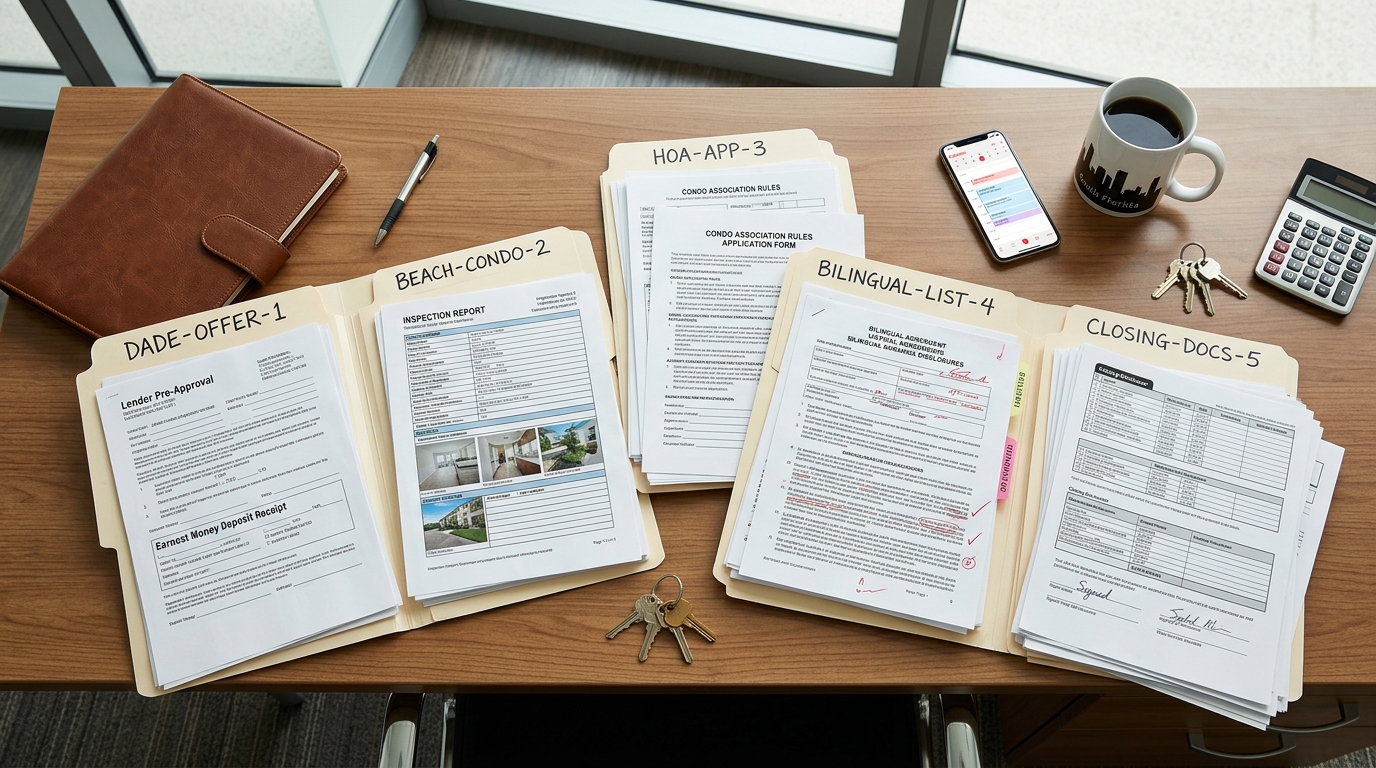

The reminder trap: why your 'automated' system still needs you for everything
Let's be honest about what most agents mean when they say they've automated follow-up. They've set up a CRM that pings them with a task: 'Check in with the Johnsons about the inspection.' Or they've built a drip campaign that sends a canned email on Day 3, Day 7, Day 14 — and then they have to go write the actual messages that feel personal enough to send.
That's not automation. That's a to-do list with a calendar attached.
Real automation means the system handles the output — the message, the timing, the send — not just the prompt to go do it yourself. Think about it this way: your thermostat doesn't remind you to adjust the temperature. It adjusts the temperature. That's the difference between a reminder system and an operational system.
Most CRMs and drip tools were built for marketing sequences — nurture campaigns aimed at cold leads. They weren't designed for the messy, milestone-driven communication that happens on an active deal. Inspection scheduled? Appraisal came in? Title work delayed? These aren't marketing moments. They're operational moments. And they require a different kind of system entirely.
What a single deal actually requires in follow-up
Before we get into what hands-off looks like, let's map out what a typical residential transaction actually demands in communication. Not the selling part — just the follow-up from executed contract to close.
You've got the buyer or seller who needs regular updates so they don't panic-text you every other day. You've got the other agent who needs coordination on access, deadlines, and documents. You've got the lender who needs nudging on conditions and clear-to-close. You've got the title company or closing attorney who needs docs and scheduling confirmation. And depending on the deal, you might have a home warranty company, an inspector, or a contractor in the mix too.
On a smooth 30-day close, that's somewhere between 25 and 40 individual communications you need to send or respond to — just on the operational side. Not counting anything that goes sideways.
Now multiply that by three, four, five active deals. This is why agents drop follow-ups. It's not laziness. It's volume. And it's why a system that reminds you to send 35 messages across five deals is almost as useless as no system at all. You were already overwhelmed. A longer task list doesn't solve overwhelmed.
Contract to close: a side-by-side walkthrough
Let's trace one deal from executed contract to close. On the left: what most agents do now. On the right: what it looks like when the follow-up system actually runs the communication.
Day 1 — Contract executed. Most agents: You manually send a welcome email to the client, text the other agent to confirm receipt, and email the lender with the contract. You write each message separately. Hands-off system: The system detects the executed contract, sends a tailored welcome update to the client, confirms receipt with the cooperating agent, and forwards the contract to the lender — all within minutes of the milestone being logged.
Day 3 — Earnest money deadline approaching. Most agents: You set a reminder for yourself and then manually check whether the deposit was made. If not, you text the client. Hands-off system: The system sends a reminder to the client 48 hours before the deadline with clear instructions. If no confirmation is logged, it follows up again 24 hours out and flags it for your attention only if it's still unresolved.
Day 7–10 — Inspection period. Most agents: You coordinate the inspection time, send the report to the client, discuss repair requests, relay them to the other side, and chase responses. Each step is a manual message. Hands-off system: The system sends the client a summary when the report is available, drafts the repair request communication based on your input or template, delivers it to the listing agent, and follows up if no response comes within the agreed window.
Day 15–20 — Appraisal and loan progress. Most agents: You call or text the lender to check on the appraisal, relay the result to the client, and hope the loan officer remembers to send conditions on time. Hands-off system: The system checks in with the lender at scheduled intervals, updates the client with a status message when there's news, and escalates to you only if there's a red flag — like a low appraisal or a missed deadline.
Day 25–28 — Clear to close and final details. Most agents: You confirm the closing date, send the client a checklist, coordinate with the title company, and make sure everyone has what they need. You're doing this across multiple deals simultaneously. Hands-off system: The system sends the client a closing prep checklist, confirms time and location with the title company, sends a final-week summary to all parties, and nudges anyone who hasn't confirmed.
Day 30+ — Post-close. Most agents: You mean to send a thank-you note and ask for a review. You do it for about half your clients. Hands-off system: The system sends a personalized closing congratulations, requests a review at the right time, and queues up a 30-day, 90-day, and anniversary check-in — without you touching anything.
Where the real damage happens: the follow-ups you don't even realize you're missing
The irony of manual follow-up is that you never feel the cost of the ones you miss. You don't get a notification that says 'You forgot to check in with the Garcias and now they're listing with someone else.' It just… doesn't happen. And because it doesn't happen, you don't feel urgency about fixing it.
The most expensive dropped follow-ups aren't the ones that blow up a current deal. Those are dramatic enough that you usually catch them. The expensive ones are the quiet ones — the post-close check-in that would have turned into a referral, the anniversary message that would have kept you top-of-mind, the mid-transaction update that would have prevented a client from feeling ignored.
One agent we've talked to estimated that she sends about 60% of the follow-ups she intends to send on active deals. That means four out of every ten communications she plans just never go out. Not because she doesn't care — because she's running between showings and her phone is blowing up and something else always feels more urgent.
That 40% gap is where trust erodes. Not in one dramatic moment, but slowly, message by message, silence by silence.
Why drip campaigns don't work for active deals
Drip campaigns are great for one thing: sending pre-written messages on a fixed schedule to people who aren't expecting a conversation. That works fine for nurturing a lead who downloaded a market report.
It falls apart completely on an active deal. Transactions don't follow a fixed schedule. They follow milestones — and milestones shift constantly. The inspection gets pushed. The appraisal comes in early. The lender needs three more days. A drip campaign can't adapt to any of that. It just keeps firing on its original timeline, sending messages that feel tone-deaf or irrelevant.
What active deals need is milestone-driven communication — follow-up that's triggered by what actually happened, not by what day it is. That's a fundamentally different architecture than a drip sequence. If you've been wondering why your follow-up still feels manual even though you built out a 'system,' this is probably why. You built a marketing tool and tried to use it for operations. It's not the right tool for the job.
If you're trying to figure out which parts of your workflow are worth automating first, we broke that down in detail in our post on what to automate first as a real estate agent. Follow-up — especially on active deals — is almost always near the top of the list.
What 'hands-off' actually means (and what it doesn't)
Let's be precise here because 'hands-off' can sound like 'reckless' if you're not careful.
A hands-off follow-up system doesn't mean you lose control. It means you're not the bottleneck. The system handles drafting, timing, and delivery. You retain the ability to review, override, or customize anything. But the default is that things go out — not that things wait for you to find 20 minutes between showings.
Think of it like a great assistant who is really good at communication. You don't write every email they send. You trust them to handle the standard updates and flag the exceptions. A well-built follow-up system works the same way — except it doesn't take PTO and it doesn't forget.
This also matters if you're working with clients in more than one language. Coordinating follow-up across English and Spanish adds a whole additional layer of complexity that most agents either handle manually or just skip. We covered the hidden cost of bilingual admin work in a separate post — it's a bigger time sink than most agents realize.
Hands-off doesn't mean you're absent. It means your presence is strategic instead of administrative. You show up for the conversations that need you — the negotiation call, the nervous first-time buyer, the tricky appraisal dispute. Everything else runs.
The compounding effect of consistent follow-up
Here's what's hard to see when you're in the middle of it: consistent follow-up compounds. Every message you send on time builds a small deposit of trust. Over a 30-day transaction, those deposits add up. By closing day, your client doesn't just feel like the deal went smoothly — they feel like you were on top of every detail.
That feeling is what generates reviews. It's what generates referrals. It's what makes someone say your name when a coworker asks, 'Do you know a good agent?'
And the reverse is also true. Every missed update, every awkward silence, every time the client had to reach out to you for a status check — those are small withdrawals. They might not blow up the deal, but they erode the experience. And a mediocre experience doesn't generate word-of-mouth. It just generates a closed transaction and a client who moves on.
The agents who consistently get five-star reviews and repeat business aren't necessarily better negotiators. They're often just better communicators — or they have systems that make them look like better communicators. The outcome is the same either way.
What to look for in a system that actually runs
If you're evaluating whether your current setup qualifies as real automation or just a dressed-up reminder list, here are the questions worth asking:
Does the system send the actual messages, or does it just remind you to send them? If you still have to open your email or your phone and type something every time, that's not automation.
Does it adapt to milestones, or does it run on a fixed calendar? Active deals need milestone-driven triggers. If your system can't adjust when a deadline moves, it's going to send the wrong message at the wrong time.
Can it handle more than one communication channel? Clients text. Lenders email. Title companies want both. A system that only works in one channel leaves gaps.
Does it escalate intelligently? The best systems handle the routine and surface the exceptions. If everything comes back to you for a decision, the system isn't reducing your load — it's reorganizing it.
Does it keep running after close? Post-close follow-up is where most agents fall off. If the system stops when the deal closes, you're losing the highest-ROI communication window — the one that turns a closed client into a referral source.