
Map language preferences by touchpoint, not just 'Spanish or English'
Asking a client "Do you prefer Spanish or English?" is like asking "Do you prefer phone or email?" — the answer depends on the context. A buyer might be fully comfortable texting in English but need contracts explained in Spanish. They might want casual updates in Spanglish but need legal disclosures in formal Spanish with time to review.
At intake, break language preference into four categories and document each one in your CRM. This becomes the reference point for every person who touches the deal — your lender, title company, inspector, and anyone else sending the client documents or messages.
| Touchpoint | Question to ask | Why it matters |
|---|---|---|
| Casual communication (texts, quick updates) | "¿Prefiere que le mande mensajes en español, inglés, o como sea?" | Sets the tone for day-to-day rapport and prevents awkward language switching |
| Financial discussions (loan terms, costs, estimates) | "Cuando hablamos de números y pagos, ¿en qué idioma se siente más cómodo/a?" | Misunderstood Loan Estimates and closing costs are a top source of mid-deal confusion |
| Contracts and legal disclosures | "¿Puede revisar contratos en inglés, o necesita versiones en español al lado?" | Determines whether you need dual-language documents or certified translations |
| Process education (timelines, inspections, next steps) | "¿Le explico el proceso en español, en inglés, o un poco de los dos?" | First-time buyers especially need process clarity in their strongest language |
Assess document comprehension — tactfully
Language preference and document comprehension are two different things. A client may prefer Spanish for conversation but read English contracts just fine. Or they may speak fluent conversational English but struggle with the legal phrasing in a Buyer Representation Agreement or a TILA disclosure.
You need to know this before the first contract hits their inbox — not after they've signed something they didn't fully understand. The Fair Housing Act doesn't require you to provide translations, but professional liability and client trust both demand you know whether your client actually comprehends what they're signing.
- During the first meeting, walk through a sample document — a one-page agency disclosure works well. Hand them the English version and ask them to read a specific paragraph aloud or summarize it back to you.
- If they hesitate or paraphrase inaccurately, offer the Spanish-language version without making it feel like a test. Frame it as: "Tengo esto también en español — mucha gente prefiere tenerlo en los dos idiomas para comparar."
- Based on what you observe, decide whether the deal needs English-only documents, dual-language side-by-side versions, or full Spanish translations for key disclosures.
- Document your assessment in the file. Note which documents need bilingual versions so you're not scrambling when Dotloop or DocuSign sends a signing packet.
Set up the communication-channel × language matrix
Once you know which language the client prefers for each type of communication, lock in which channel carries each message type. This sounds granular, but it's the difference between a smooth deal and one where the client misses a deadline because a critical email arrived in the wrong language on a channel they don't check.
| Channel | Best for | Language note |
|---|---|---|
| WhatsApp / text | Quick updates, showing confirmations, casual check-ins | Usually the client's most comfortable language — often Spanish or Spanglish |
| Document delivery, formal timelines, lender/title coordination | Match the language of the document being sent; add a brief summary in the client's preferred language | |
| Phone / video call | Complex explanations, financial discussions, contract reviews | Use whichever language the client flagged for financial and legal discussions |
| Client portal (Dotloop, DocuSign) | Signing packets, disclosure delivery | Flag which documents need bilingual versions before upload |
The real payoff here is that every vendor on the deal — lender, title agent, inspector — can follow the same map. Share a one-line summary with each vendor when you introduce them to the client: "Maria prefers texts in Spanish, emails in English, and needs contracts reviewed in Spanish before signing." That single sentence prevents half the miscommunication in a bilingual deal.
Pre-populate the file with Spanish-language documents
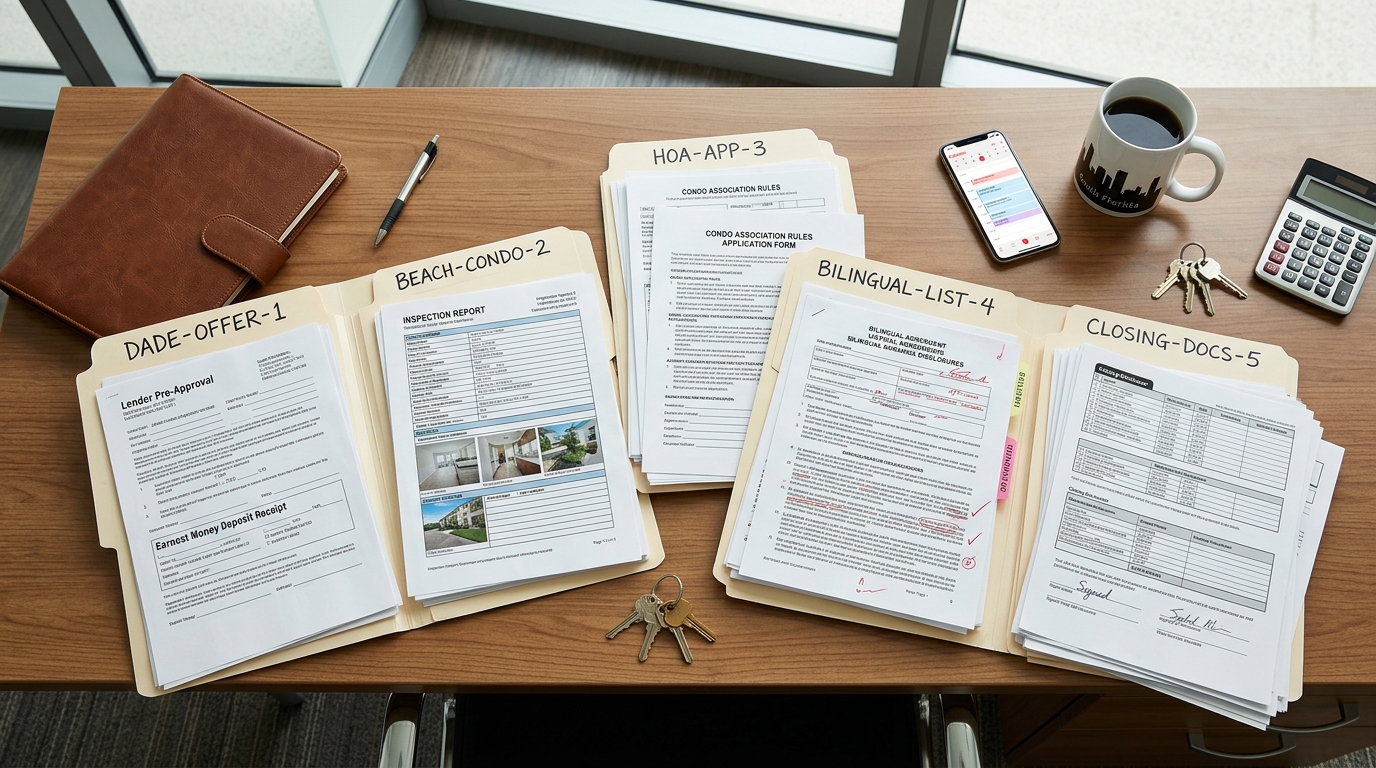
Don't wait until the client needs a document to find out whether a Spanish version exists. By the end of the first meeting, your client file should already contain the bilingual versions you'll need. This is where most agents fall behind — they know the documents exist but scramble to find them at 9 PM the night before a deadline.
- Buyer Representation Agreement (Acuerdo de Representación del Comprador) — check your brokerage for an approved bilingual version or prepare a side-by-side
- Agency disclosure in Spanish — your state association likely has one
- HUD's Spanish-language homebuyer guide ("Comprar una Casa") and CFPB's bilingual Loan Estimate explainer
- Fannie Mae HomeView enrollment link — the homebuyer education course is available in Spanish and satisfies many first-time buyer program requirements
- A plain-Spanish summary of your local market process: offer → inspection → appraisal → closing, with approximate timelines
As we covered in our breakdown of the growing Spanish-speaking homebuyer market, the demand for these materials is accelerating. Agents who pre-build their bilingual document library now won't be caught flat-footed when three Spanish-speaking buyers land in the same month.
Onboard the decision-making circle, not just the signer
In many Spanish-speaking households, the person signing the contract isn't the only decision-maker. A spouse, parent, or trusted advisor — sometimes called a compadre — may weigh in on every major choice. If you don't identify these people at the first meeting and understand their language and communication preferences, you'll hit a wall when the buyer says "déjame hablar con mi papá" two days before the offer deadline.
- Ask directly: "¿Hay alguien más que va a participar en las decisiones de la compra?" (Is there anyone else who will be part of the buying decisions?)
- For each decision-maker, note their name, relationship, preferred language, and best contact method.
- Clarify who gets copied on what — does the father-in-law want to see every email, or just a phone call before offer day?
- Set expectations about response timelines: if the buyer needs to consult someone who's in another time zone or another country, build that lag into your offer strategy.
This isn't just cultural sensitivity — it's deal mechanics. An unidentified decision-maker who surfaces at the wrong moment can stall an offer, kill an inspection negotiation, or cause a last-minute walkaway. Name them, map them, and build them into your communication plan on day one.
Surface financing-path questions before underwriting does
The single most expensive mistake in a bilingual buyer intake is skipping the financing-path conversation. First-generation buyers and immigrant buyers often have non-standard financial profiles that are completely workable — but only if you surface them early enough to route to the right lender and loan program.
| Intake question | Why it matters |
|---|---|
| SSN or ITIN? (¿Tiene número de Seguro Social o ITIN?) | ITIN buyers qualify for certain loan programs but not conventional Fannie/Freddie. Your lender needs to know this on day one, not at application. |
| Foreign income or assets? (¿Tiene ingresos o ahorros en otro país?) | Foreign income documentation requires extra verification time. Starting late means missed closing dates. |
| Credit history in the U.S.? (¿Tiene historial de crédito aquí?) | Thin-file or no-file buyers may need 3–6 months of credit-building before they're mortgage-ready. Better to know now than after they've fallen in love with a house. |
| Gift funds from family abroad? (¿Va a recibir ayuda de familia para el enganche?) | International gift funds require sourcing documentation that takes weeks. RESPA and lender guidelines are strict here. |
None of these questions are embarrassing or invasive when you frame them as standard intake. Say: "Le pregunto esto a todos mis clientes para asegurarme de que estemos con el programa de préstamo correcto desde el principio." (I ask every client this to make sure we're on the right loan program from the start.) That framing normalizes the conversation and protects the client from a surprise denial weeks down the road.
The first meeting sets the language, channel, document, and financing foundation for the entire deal. Every gap you leave open here becomes a mid-transaction fire drill. Lock it down once, and the rest of the deal runs on the rails you built — in both languages.