The three earnest money clauses that break down in bilingual deals
Not every clause in a purchase agreement creates equal risk. In bilingual transactions, three specific provisions generate the majority of earnest money disputes — and each one fails for the same reason: legal shorthand that doesn't translate intuitively into Spanish, no matter how fluent the agent or how good the translation.
| Clause | English shorthand | Where Spanish comprehension breaks |
|---|---|---|
| Automatic default / cure period | 'Buyer shall be in default if… within X calendar days' | "Incumplimiento automático" sounds like a penalty, not a forfeiture trigger. "Período de cura" has no common-use Spanish equivalent — buyers hear "cure" and think medical, not contractual remedy. |
| As-is inspection contingency waiver | 'Property accepted in its present condition; buyer waives…' | "Tal como está" captures the surface meaning, but buyers often don't grasp that they're waiving the right to renegotiate after inspection — not just accepting current cosmetic condition. |
| Release-of-deposit timeline | 'Demand for deposit… 15 calendar days… failure to respond constitutes consent' | "Demanda de depósito" sounds like a lawsuit. Silence-as-consent is culturally unfamiliar — many Spanish-speaking buyers assume no response means the dispute is still open. |
Notice the pattern: literal translation gets the words right but misses the mechanism. A buyer who hears "tal como está" might nod — they understand "as-is." What they don't understand is that signing the as-is addendum means the inspection contingency is gone as a negotiating lever. That gap between word comprehension and contract comprehension is where disputes start.
Why the comprehension gap gets worse at dispute stage
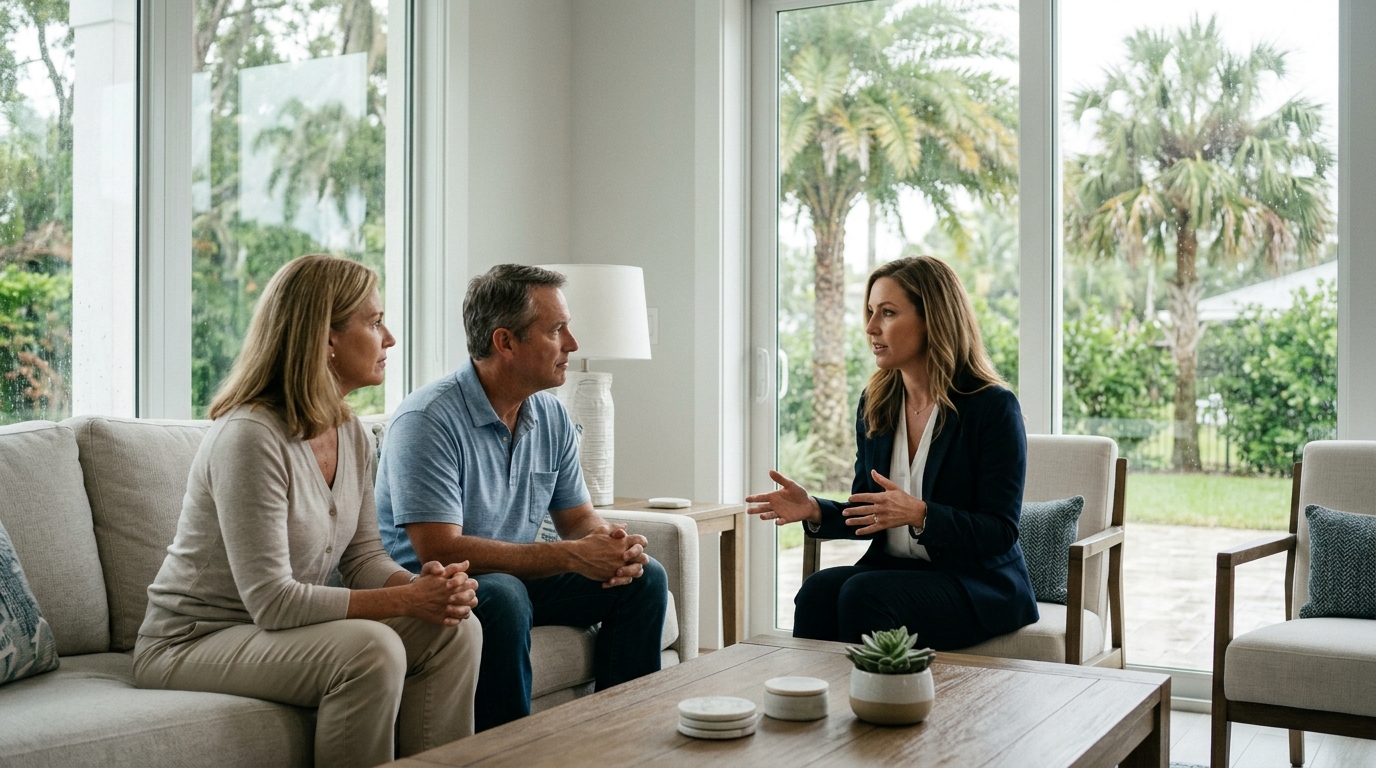
Here's where most agents get caught. During signing, you explained the automatic default clause. You walked through the as-is waiver. You answered questions. Your buyer nodded, signed, and moved forward. Six weeks later, the deal collapses — and your buyer says, 'I didn't know I'd lose my deposit if I missed that deadline.'
The seller's attorney points to the signature. Your broker asks what you told the buyer. You remember explaining it, but you have nothing in writing — no notes on which clauses you covered, no record of the buyer's questions, no signed acknowledgment that the explanation happened. Your verbal walkthrough is now your only evidence of informed consent.
In a complaint or mediation, a signed contract proves the buyer agreed to terms. It does not prove the buyer understood them. The agent's explanation is the bridge — and without documentation, that bridge doesn't exist on the record.
NAR Code of Ethics Article 1 and Standard of Practice 1-9 oblige agents to ensure clients understand the terms of a transaction. HUD's LEP guidance and Executive Order 13166 reinforce the expectation that limited-English-proficiency clients receive meaningful access to services. None of these create an automatic liability finding — but all of them shape how a complaint is evaluated. An agent with no documentation of their bilingual explanation is starting from behind.
We've written before about how bilingual deals require a verbal explanation layer on top of every document — and earnest money clauses are the sharpest example of why that layer needs to be documented, not just delivered.
The bilingual time tax: 20 minutes versus 5 minutes, per clause set
In a monolingual deal, the earnest money clauses get covered during a standard form review. Five minutes, maybe less — the buyer reads the language, the agent highlights the key deadlines, and everyone moves on. In a bilingual deal, those same three clauses require 20 to 30 minutes of focused, contextual explanation.
- Automatic default: you need to explain what 'cure period' means in practice — not just translate the phrase, but walk through a scenario where the buyer misses a deadline and what happens next.
- As-is waiver: you need to separate 'accepting the current condition' from 'giving up the right to renegotiate after inspection.' Many buyers conflate these until you use a concrete example.
- Release-of-deposit timeline: you need to explain that silence counts as consent under the standard form — and that the 15-day (or 10-day, depending on state) clock starts when the demand is served, not when the buyer reads it.
That's 20–30 minutes per deal, just for earnest money. Multiply by five bilingual deals a month and you've added two to three hours of explanation time that monolingual agents don't carry. It's a real operational cost. But a single earnest money dispute that goes to mediation costs $3,000–$8,000 in time, legal fees, and lost referrals. The walkthrough pays for itself on the first avoided dispute.
A pre-signing earnest money walkthrough protocol
The goal isn't to turn every signing into a legal seminar. It's to cover the three high-risk clauses in a structured way, log the buyer's questions, and create a signed record that the explanation happened. Twenty minutes of process now saves weeks of dispute later.
- Before the signing meeting, prepare a one-page summary (in Spanish) of the three high-risk clauses — automatic default, as-is waiver, and release-of-deposit timeline. Use plain language and a concrete scenario for each. This is not a translated contract; it's an explanation aid.
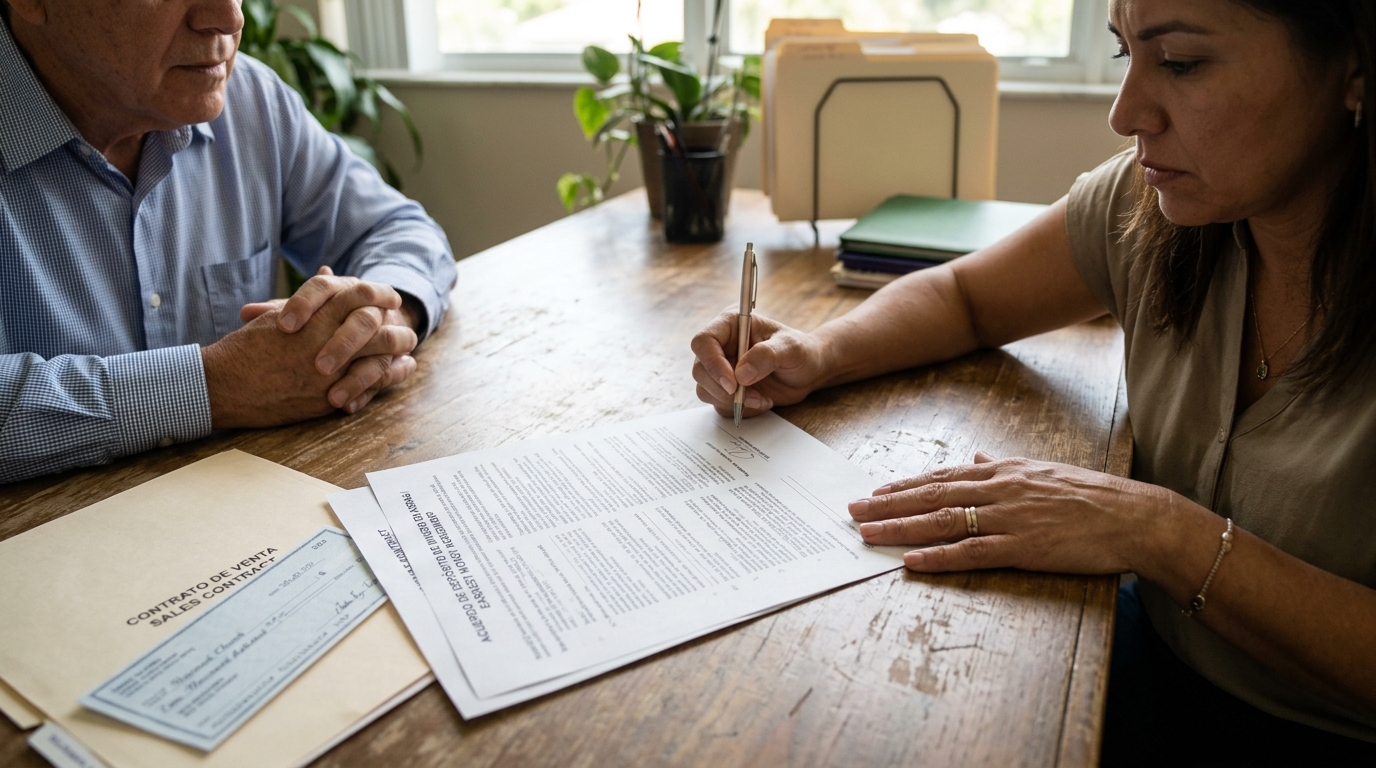
- At the signing table, walk through each clause using the summary. For each one, state the mechanism in Spanish, give a scenario ('If you miss this deadline, here is what happens to your $15,000 deposit'), and ask the buyer to repeat back what they understood.
- Log every question the buyer asks about earnest money. Write the question down on the summary sheet, in the buyer's words — Spanish is fine. Note the answer you gave.
- After covering all three clauses, have the buyer sign and date the summary sheet with a line that reads: 'The above clauses were explained to me in Spanish. I had the opportunity to ask questions.' Keep a copy in the deal file.
- If the buyer has questions you cannot answer — anything touching legal interpretation of the cure period, or whether a specific inspection finding qualifies as a valid objection — note it on the sheet and refer them to a real estate attorney. Do not interpret the contract. Document the referral.
This protocol adds structure to what most bilingual agents already do informally. The difference is the paper trail. When a dispute surfaces six weeks later, you have a signed sheet showing which clauses you covered, what questions the buyer asked, and what you said. That changes the dynamic in mediation entirely — and it's the kind of documented verbal explanation layer that separates a defensible process from a finger-pointing match.
Can a buyer get their earnest money back if they didn't understand the contract?
This is the question that drives most bilingual earnest money disputes to mediation. The short answer: it depends on the state, the contract language, and what can be shown about the buyer's comprehension at signing. A signed contract creates a presumption of agreement — but that presumption is not absolute.
In Florida, the FAR/BAR as-is contract routes earnest money disputes through a specific release-of-deposit procedure before either party can go to court. In Texas, TREC rules require the escrow holder to maintain the deposit until both parties agree or a court orders release. In California, Civil Code Section 1632 adds a layer: if the negotiation was conducted primarily in Spanish and no translated contract was provided, the buyer may have grounds to void the agreement.
Across all three states, the agent's documented explanation — or lack of one — becomes material evidence. A buyer who can show they received no explanation of key clauses in their primary language has a stronger position than one who simply claims they didn't understand. And an agent who can produce a signed walkthrough summary is in a fundamentally different position than one who says, 'I'm sure I explained it.'
The walkthrough protocol doesn't guarantee you'll avoid every dispute. But it shifts the question from 'Did the buyer understand?' — which is unprovable — to 'Did the agent document a reasonable explanation process?' — which is verifiable.
Turn the time tax into a competitive advantage
Most agents treat the bilingual explanation overhead as a cost to absorb. It's extra time, extra effort, no extra commission. But the agents who document it — who build a structured walkthrough into their pre-signing process — end up with something their competitors don't have: a referral-worthy reputation in Spanish-speaking buyer communities.
When a buyer's cousin asks, 'Who did you use? Did they explain everything?' — the answer matters. Agents who rush through signing and point at the signature line don't generate that answer. Agents who spend 20 minutes walking through the three clauses that actually matter, in the buyer's language, with a signed record, do.
The operational cost is real. Twenty to thirty minutes per deal, compounding across your volume. That's where your systems need to absorb the rest of the bilingual admin load — follow-up, document tracking, deadline management — so that the time you spend on explanation is protected, not squeezed. We've seen agents who treat the walkthrough as non-negotiable and delegate everything around it close more cleanly and generate more referrals from Spanish-speaking households.