A bilingual audit of the tools agents actually use
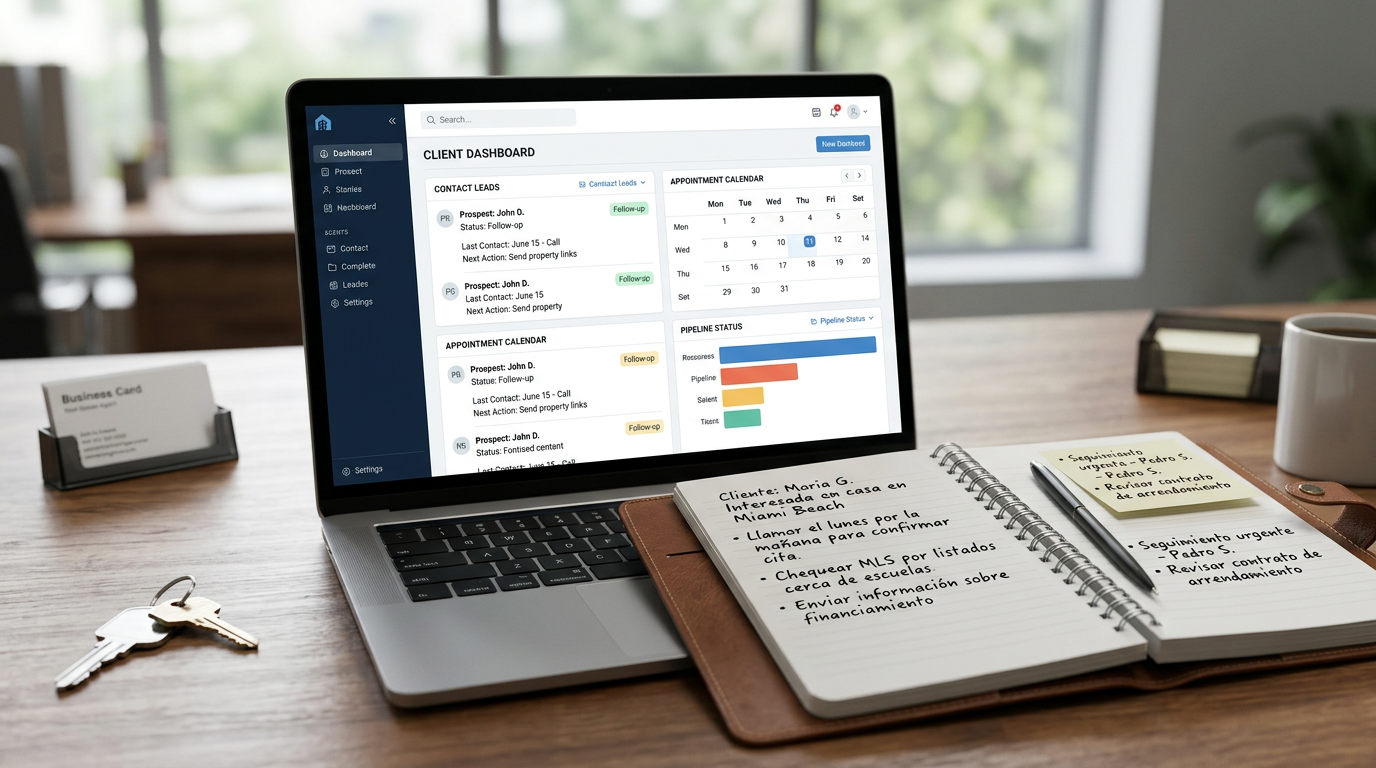
We looked at the AI-powered platforms bilingual agents encounter most — kvCORE, Follow Up Boss, Lofty (formerly Chime), Sierra Interactive, and standalone tools like ChatGPT and Jasper — and tested a simple question: can you run a Spanish-language lead through the full workflow without leaving the tool?
The answer, across the board, is no. Some handle fragments. None handle the full cycle.
| Tool | Spanish input? | Spanish output? | Bilingual workflow? |
|---|---|---|---|
| kvCORE | Limited — UI is English-only | No native Spanish drips or templates | No |
| Follow Up Boss | Accepts Spanish text in notes | No AI-generated Spanish follow-up | No |
| Lofty AI assistant | English prompts only | English responses only | No |
| ChatGPT / Claude | Yes — strong multilingual input | Yes — but requires manual prompting each time | Manual only |
| Jasper / Copy.ai | English-first templates | Can generate Spanish with custom prompts | No integrated workflow |
Zillow and Realtor.com offer some consumer-facing Spanish content, but those features don't extend to the agent tools. Homebot, a popular client engagement platform, runs English-only reports. The pattern is consistent: Spanish support stops at the consumer surface and never reaches the operational layer where agents actually work.
Where Spanish breaks in the deal lifecycle
The failures aren't random. They cluster at specific deal stages. We've mapped where bilingual agents lose AI support as a deal moves from lead capture to closing — and the gaps are predictable.
- Lead capture: Most AI chatbots on agent websites respond in English only. A Spanish-speaking lead who texts a question gets an English auto-reply — or nothing.
- Nurture sequences: CRM drip campaigns are templated in English. There's no Spanish-language sequence built in, so agents either skip automated nurture for Spanish leads or translate each message manually.
- Showing follow-up: AI-generated follow-up summaries after showings default to English. Agents copy the output into ChatGPT, translate, review, then paste it back — a four-step workaround for what should be one step.
- Offer and negotiation: Document summaries and talking points generated by AI tools assume English-language contracts. When an agent needs to explain a counteroffer to a Spanish-speaking buyer, the AI can't help.
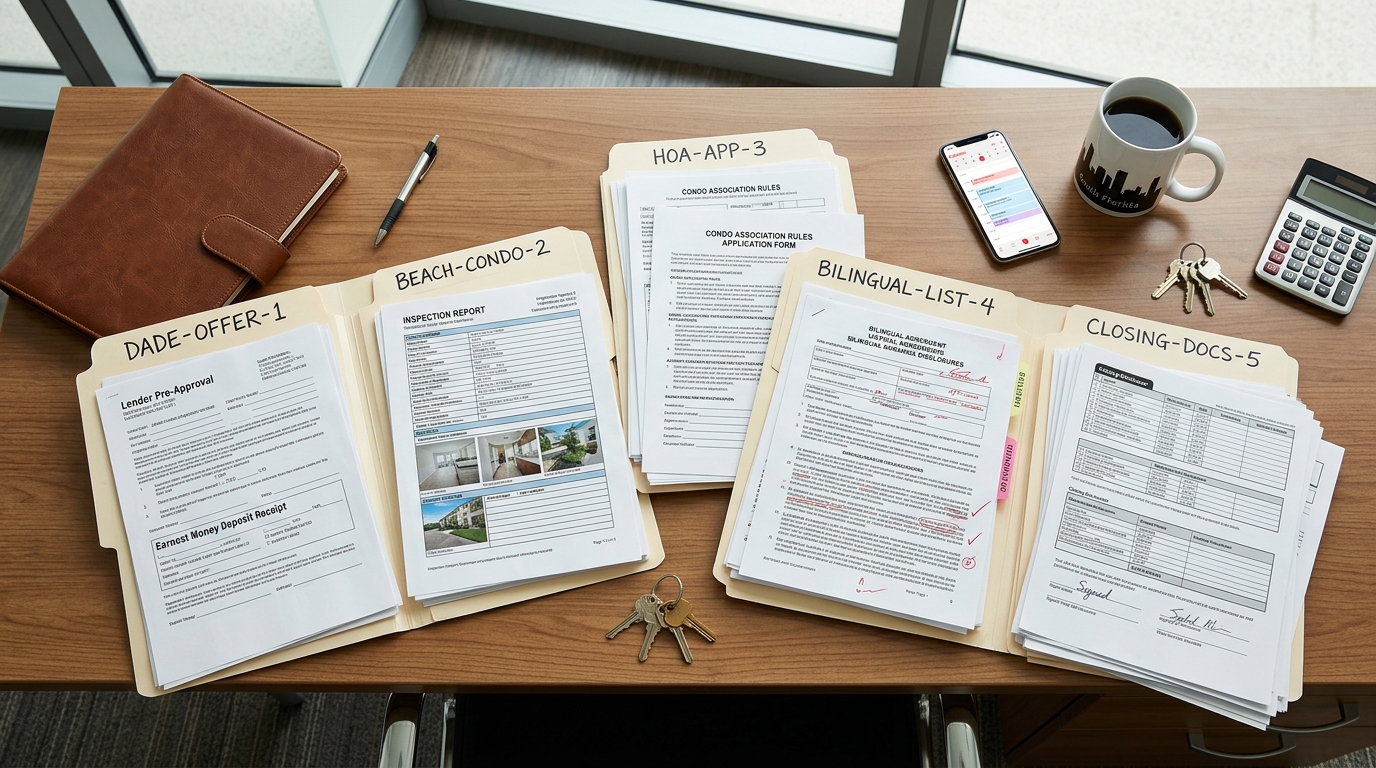
- Closing coordination: Disclosure explanations, HOA summaries, and timeline reminders are all English-only outputs. This is where the compliance risk gets real.
The common thread: every AI tool assumes the deal runs in one language. Bilingual deals don't. They switch languages at every handoff — English with the title company, Spanish with the buyer, English on the contract, Spanish on the phone explaining what the contract means. No mainstream tool tracks or manages that switching.
The workaround tax: why duct-tape bilingual AI costs more than it saves
Most bilingual agents we've talked to have built their own workaround stack. It usually looks like this: run the English AI tool, copy the output, open ChatGPT or DeepL, paste, translate, review the translation for accuracy, adjust the tone and formality, then paste the final version into the CRM or client message. That's six steps for every single communication that should have been one.
DeepL tends to produce more natural Spanish than Google Translate for real estate terms, but neither understands the difference between a formal client update and a casual WhatsApp check-in. Cultural tone matters. A literal translation of 'Just checking in on your pre-approval status!' reads stiff and awkward in Spanish if you don't adjust register and phrasing.
| Workaround | Time per use | Hidden cost |
|---|---|---|
| Copy-paste into ChatGPT for translation | 3–5 min | Requires review — AI sometimes invents legal terms in Spanish that don't exist |
| Maintaining dual-language email templates | 2–4 hrs upfront + ongoing updates | Templates drift out of sync; English gets updated, Spanish version doesn't |
| Google Translate for client texts | 30 sec | Tone is robotic, formality is wrong, client trust erodes |
| DeepL for longer documents | 5–8 min per doc | Better quality but still misses real estate-specific terminology |
If your AI tool saves you 15 minutes on a task but you spend 12 of those minutes translating and fixing the output for your Spanish-speaking clients, you didn't save 15 minutes. You saved three — and added a new failure point.
What a genuinely bilingual AI workflow actually requires
Translation is the smallest part of the problem. A tool that just converts English output to Spanish is a glorified Google Translate wrapper. What bilingual agents need is an operational layer that understands language as a deal attribute — not an afterthought.
This is what we mean by decision architecture in bilingual deals. The system needs to know that this buyer prefers Spanish for communication but the lender works in English. It needs to know that disclosure explanations go out in Spanish but the signed documents are in English. It needs to track which language each party operates in and route accordingly.
- Language preference stored per contact and per deal — not a global setting that applies to everything
- Automated follow-up sequences that generate natively in the client's preferred language, not translated after the fact
- Document summary outputs that match the recipient's language, with awareness that real estate terminology varies between Mexican Spanish, Caribbean Spanish, and other regional registers
- Compliance-aware guardrails that flag when an AI-generated Spanish summary touches a legal disclosure, so the agent can review before sending
- Handoff tracking that knows when communication switches languages mid-deal — English with the title company, Spanish with the buyer — and keeps both threads coherent
Can ChatGPT or Claude handle bilingual real estate prompts?
Yes and no. Both GPT-4o and Claude handle Spanish well at the raw language level. You can prompt either one to write a follow-up email in Spanish for a buyer who just toured a property, and the output will be grammatically correct. The problem is everything around that output.
You have to write the prompt every time. You have to supply the deal context every time. You have to specify the formality level, the regional dialect preference, and whether the client is a first-generation buyer who needs extra explanation of U.S.-specific terms like escrow or HOA. None of that context carries forward between sessions.
- No memory of client language preference across interactions
- No integration with your CRM, so every output requires manual copy-paste
- No awareness of deal stage — it doesn't know you're in inspection period vs. closing week
- No compliance layer — it will happily translate a disclosure summary with errors it can't flag
- Prompt engineering for culturally appropriate Spanish (not just linguistically correct) is a skill most agents don't have time to develop
ChatGPT and Claude are powerful multilingual engines. But using them for bilingual real estate work today is like having a fluent Spanish speaker on your team who has amnesia every morning and no access to your files. The capability is there. The operational wrapper isn't.
The market isn't waiting for tools to catch up
NAHREP has been tracking Hispanic homeownership growth for years. U.S. Census data shows the Hispanic population driving a disproportionate share of new household formation. NAR's numbers confirm the buying activity. The demand side is clear and accelerating.
Meanwhile, the AI tool ecosystem is still building for a monolingual market. That gap is an operational liability for agents who serve bilingual clients today — and a missed opportunity for the platforms that could close it.
Bilingual agents aren't asking for a Spanish version of an English tool. They need tools that understand bilingual deals are structurally different — different communication patterns, different trust timelines, different compliance risks. Language is just the surface layer.
If you're a bilingual agent trying to adopt AI tools right now, the honest assessment is this: you'll get maybe half the value that an English-only agent gets from the same platform. The other half leaks out through workarounds, manual translation, and compliance anxiety. That's the gap that needs closing — not with a translate button, but with a workflow that was bilingual from the start.