The time math most agents haven't done
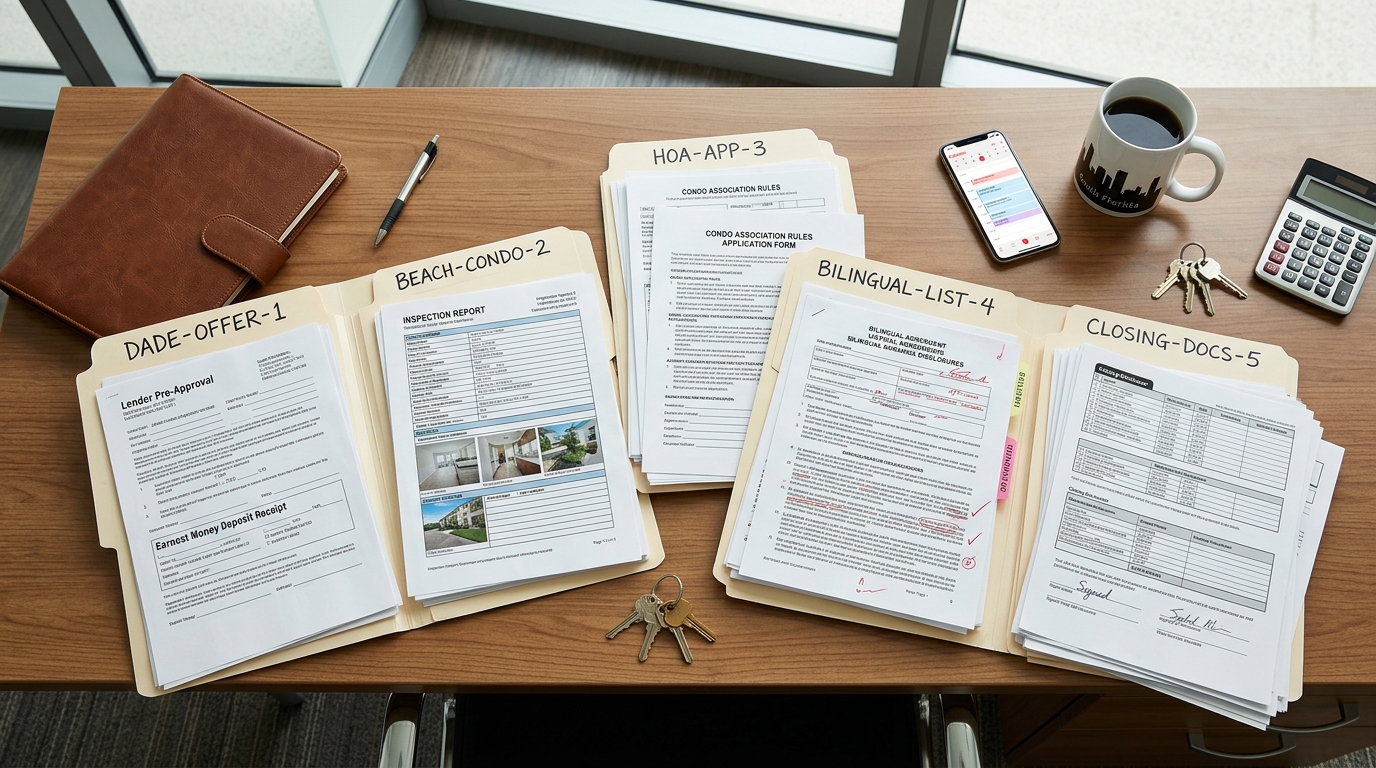
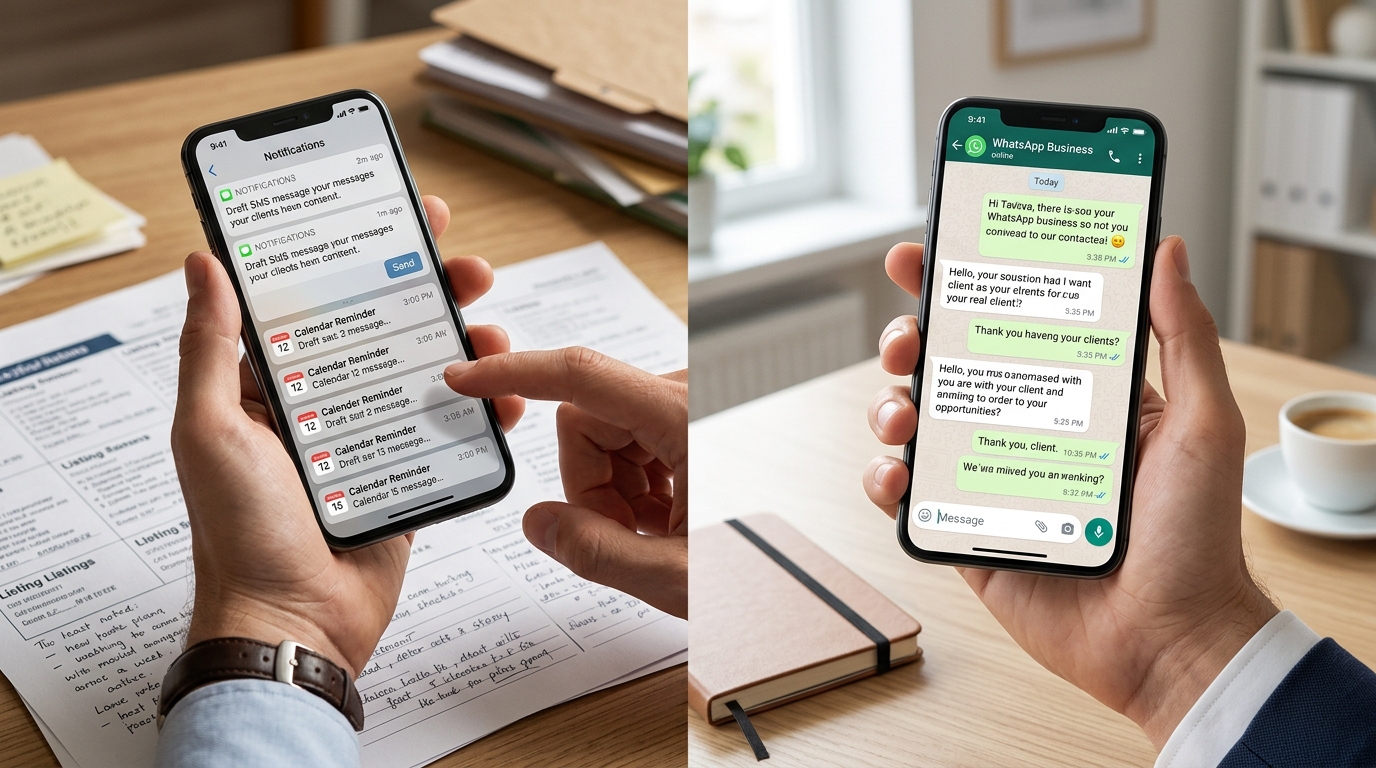
Before we get to the weekly view, let's ground the numbers. An agent running five active deals has roughly 15 to 25 distinct follow-up touchpoints per week: post-showing check-ins, document nudges, lender status pings, listing update alerts, and the "just checking in" messages that keep a deal warm. Each one takes 3 to 7 minutes to compose, personalize, and send — especially if you're switching between English and Spanish threads.
That's 75 to 175 minutes per week spent writing messages that aren't selling. Nearly three hours at the midpoint. For agents in the 3–8 deals/month range, those hours sit right in the window where you could be running one more showing, handling one more listing appointment, or just eating lunch without your phone buzzing.
That distinction matters because when agents say "my follow-up is inconsistent," they usually don't mean their drip campaigns are broken. They mean the contextual, mid-deal communication — the stuff that requires knowing where the inspection stands or what the lender said yesterday — is what slips. That's where trust starts to decay, sometimes within 48 hours of silence.
Your week before vs. after: a side-by-side
Here's what a typical Monday-through-Friday looks like for an agent managing five deals manually — and what changes when an AI-driven system like Reddy handles the routine follow-up layer. This isn't hypothetical. It's built from patterns we've observed across agents in the 3–8 deals/month range.
| Day | Before (manual) | After (with Reddy) |
|---|---|---|
| Monday | Write 4–6 "weekend recap" messages to active buyers and sellers. Check deal status in MLS, then compose updates from scratch. | Review a summary of messages Reddy drafted and sent over the weekend. Approve or edit any flagged items. ~10 min total. |
| Tuesday | Chase lender and title updates. Relay status to clients via text. Compose 2–3 follow-ups for leads who went quiet. | Lender/title status pings go out automatically with deal context. You get a digest of client replies that need your voice. Quiet-lead follow-ups already sent. |
| Wednesday | Mid-week showing day. Follow-up from Monday's showings still not sent. Draft messages between appointments in parking lots. | Post-showing recaps sent within hours of each showing. You spend drive time prepping for the next appointment, not composing texts. |
| Thursday | Document reminder day. Manually check what's outstanding, text each client individually. Easily 30–45 min. | Outstanding-document nudges sent automatically with specific items named. You only step in when a client pushes back or has a question. |
| Friday | End-of-week status updates to sellers. "Happy Friday" check-ins to warm leads. Often skipped because you're exhausted. | Seller updates and warm-lead touches go out on schedule. You review a 2-minute summary of what was sent and what got replies. |
The shift isn't that you stop communicating. It's that you stop composing from scratch. The messages that carry deal context — inspection dates, document names, lender timelines — get drafted and sent without you sitting down to write each one. What stays on your plate is the judgment layer: the replies that need your expertise, the conversations that need your voice.
What stays manual (and should)
Not every follow-up moment should be automated, and any system that claims otherwise is overselling. There are moments in a deal where your client needs to hear from you — not from a well-timed message that happens to have your name on it.
- Post-inspection reassurance — when a buyer is panicking about a roof issue or foundation crack, they need your read on the situation, not a scheduled check-in.
- Price reduction strategy conversations — these require market judgment, seller psychology, and often a phone call. No AI system should be making pricing arguments on your behalf.
- Closing-week emotional check-ins — first-time buyers especially need a human voice in the final 72 hours. This is where referrals are earned.
- Escalation moments — when a lender goes dark, when a title issue surfaces, when a co-op agent isn't responding. These require your relationships and your license.
Reddy is built to recognize these moments and hand them back to you with context — not to barrel through them with a generic message. When a deal enters a sensitive window, you get a flag, not an auto-send. This is the difference between an operational assistant and a chatbot that doesn't know when to stop talking.
The goal isn't zero follow-up work. It's making sure the follow-up work you do is the high-value kind — the kind that earns trust and closes deals.
The first two weeks: what the transition actually feels like
The biggest fear agents have about switching isn't the technology — it's the timing. You're mid-deal. You have clients expecting your voice. You can't afford a gap in communication while you figure out a new system. We've seen this enough to know what works.
- Days 1–3: Reddy maps your active deals — who's in contract, what stage each deal is at, what's outstanding. You don't pause anything. Your manual follow-up continues as normal.
- Days 4–7: The system starts drafting messages for your review. You see every message before it goes out. Think of it as a copywriter sitting next to you, not an autopilot you can't see.
- Days 8–14: As you build confidence in the tone and accuracy, you shift from reviewing every message to reviewing flagged ones. Most agents let routine touches (document reminders, status updates) run on their own by day 10.
- Day 14+: You're running the review-and-override model — the system handles volume, you handle judgment. Average review time: under 15 minutes per day.
The parallel period matters. We don't ask you to flip a switch and trust a system you've never seen work on your deals. The ramp is deliberate: you keep control until the system earns it. If a message feels off, you edit it. If a client needs your personal touch, you override it. Nothing goes out that you haven't approved — until you decide otherwise.
When AI follow-up goes wrong — and your guardrails
Let's talk about the uncomfortable part. AI follow-up can misfire. A message might reference an outdated inspection date. The tone might feel too casual for a nervous seller. A follow-up might land at 8 PM when your client prefers morning communication. These aren't hypothetical — they're the exact scenarios that make agents hesitate.
The difference between a system you can trust and one you can't isn't whether errors happen — it's how fast you catch them and how easy they are to fix. Reddy uses a review queue that surfaces anything outside normal parameters: unusual timing, sensitive deal stages, new clients who haven't received a message from the system before.
- Review queue — flagged messages wait for your approval before sending. You set which deal stages and client types require manual review.
- Override protocol — any message can be edited, delayed, or killed from your phone before it sends. One tap, not a dashboard deep-dive.
- Tone calibration — the system learns from your edits. If you consistently soften language for a particular client, future drafts adjust.
- Escalation triggers — certain keywords and deal events (inspection failure, appraisal gap, financing contingency deadline) automatically pause auto-send and alert you.
The point isn't that AI follow-up is perfect. It's that your current system — composing every message from scratch between showings — has its own failure rate. Messages that never get sent are worse than messages that need a quick edit. The trust decay curve in real estate is steep: 48 hours of silence can undo weeks of rapport-building.
Is the switch worth it at your deal volume?
This is the honest question. If you're closing one deal a month, the math probably doesn't justify a new system — your follow-up volume is manageable even if it's messy. But at 3 to 8 deals per month, the compounding effect of manual follow-up starts to bite. Every new deal adds 5 to 8 weekly touchpoints, and unlike showing appointments, follow-up doesn't have a hard calendar slot protecting it.
| Monthly deals | Weekly follow-up touches | Manual time/week | After switch |
|---|---|---|---|
| 3 | 10–15 | 50–90 min | ~15 min review |
| 5 | 15–25 | 75–175 min | ~15 min review |
| 8 | 25–40 | 125–280 min | ~20 min review |
At five deals, you're recapturing roughly an hour to two and a half hours per week. At eight deals, it's closer to two to four hours. That's not life-changing on paper — but it's the exact window where most agents either add another deal or start dropping balls on the ones they have.
The agents who benefit most aren't the ones who hate follow-up. They're the ones who are good at it but can't sustain it at their current deal volume without something breaking.