The 'just translate it' assumption is where it starts breaking
Here's the default move: you have an English drip sequence that converts reasonably well, so you translate the messages into Spanish and load them into the same cadence. Same intervals. Same tone. Same structure. Just in Spanish now.
On paper, this makes sense. In practice, it's where the problems begin — because you didn't just change the language. You changed the entire communication context without changing any of the systems around it.
A direct English-to-Spanish translation of a follow-up message can be grammatically correct and still land wrong. English follow-up tends to be casual, brief, and transactional. 'Hey Maria, just checking in — still interested in that 3/2 in Doral?' That works fine in English. Translated directly into Spanish, it can feel abrupt, overly familiar, or like you're rushing the relationship.
This isn't a translation quality problem. It's a register problem. Spanish-language business communication — especially in real estate, especially with first-generation buyers — often runs at a different formality level than English. The same message needs different framing, not just different words.
Formality miscalibration kills responses quietly
In English, casual follow-up is the default. 'Quick question,' 'Just circling back,' 'Wanted to make sure you saw this.' These phrases are low-pressure by design, and English-speaking leads generally read them that way.
In Spanish, that same casualness can read as dismissive. Or presumptuous. Especially if the client is older, if they're navigating the process for the first time, or if they come from a market where the agent-client relationship carries more formal weight.
The tricky part is that this miscalibration doesn't generate a complaint. The client doesn't write back and say, 'Your tone felt too informal.' They just don't respond. And you, the agent, log it as a cold lead — when it was actually a warm lead who felt the communication wasn't serious enough to trust.
This is one of the most common bilingual follow-up failure modes, and it's almost impossible to diagnose from your CRM dashboard. The data just looks like low engagement. You'd never know the cause was a formality mismatch unless someone told you — and your tools certainly won't.
Timing assumptions don't translate across communication cultures
Most follow-up sequences are built around a cadence: day one, day three, day seven, day fourteen. Maybe a text on day two and an email on day five. These intervals come from English-language sales research, English-language CRM defaults, and English-language conversion benchmarks.
But communication pacing is cultural, not universal. In many Spanish-speaking markets — and among many Spanish-speaking clients in the U.S. — the expected rhythm of professional relationship-building is different. A check-in on day one might feel eager. A gap of seven days might feel like abandonment. A rapid-fire three-message sequence in the first week might feel pushy rather than persistent.
This doesn't mean Spanish-speaking clients want less follow-up. It often means they want differently shaped follow-up. Longer initial messages that establish context. Warmer openings before getting to the ask. A willingness to have a conversation before proposing a next step.
When your CRM fires the same timing logic regardless of language, you're applying one culture's follow-up rhythm to a client who operates on a different one. And again — when it doesn't work, it just looks like the lead went cold. The system has no way to tell you the cadence itself was the problem.
Context gets dropped when conversations switch languages
Here's a scenario bilingual agents deal with constantly: a lead comes in through a portal in English. Your system tags them and starts an English sequence. They respond — in Spanish. Now you're switching languages mid-thread.
Maybe you handle this manually. You read the Spanish reply, you respond in Spanish, and you adjust going forward. But your CRM doesn't adjust. Your drip sequence doesn't adjust. Your follow-up templates keep firing in English unless you manually override them.
Or the reverse: a client starts in Spanish, you build rapport in Spanish, and then the transaction moves into the contract phase where everything is in English. Suddenly the communication tone shifts, the formality changes, and the client feels like they're dealing with a different person — or a different company.
This language-switching friction is a bilingual-specific failure mode. Monolingual agents never encounter it. Their systems, their templates, and their tone stay consistent from first contact to close. Bilingual agents are constantly managing two parallel communication tracks, and every time one crosses into the other, context leaks out.
If you've ever felt like the bilingual admin overhead in your business is higher than it should be, this is one of the places that cost hides. We broke down the broader cost picture in our post on the hidden cost of bilingual real estate admin — the follow-up layer is just one piece of it.
Channel preferences split along language lines too
In the U.S., the standard real estate follow-up stack is email, text, and maybe a phone call. CRMs are built around these channels. Sequences are designed for them. Tracking works through them.
But a significant portion of Spanish-speaking clients — especially in South Florida, Texas, and other bilingual markets — prefer WhatsApp. Not as a backup. As their primary communication channel. They check it more often. They respond faster on it. They trust it more for important conversations.
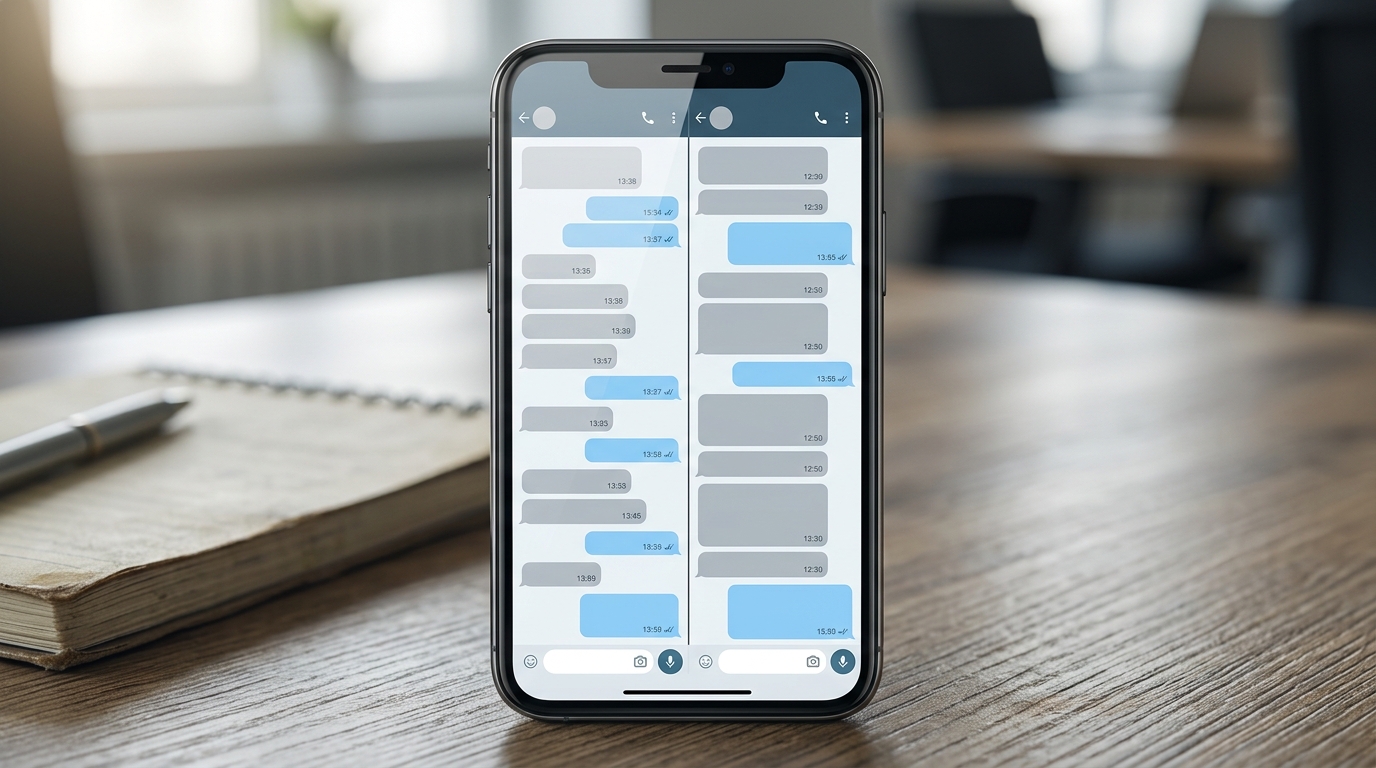
Your CRM probably doesn't have a native WhatsApp integration that handles follow-up sequences. So what happens? You run your English leads through the CRM and your Spanish leads through a manual WhatsApp thread. One has tracking, analytics, and automated follow-up. The other has your memory and your phone.
This channel split means bilingual agents are running two separate follow-up operations — one systematic and one improvised. The improvised one works fine when you have five Spanish-speaking leads. It breaks down completely when you have twenty-five, or when you're juggling multiple deals at once and the manual threads start falling through the cracks.
The failure is invisible because the tools can't see it
This is the part that makes bilingual follow-up problems so persistent: they don't show up in any report your CRM generates.
When an English-language follow-up sequence fails, you can usually trace it. Open rates drop. Click-throughs decline. You test a new subject line, adjust the send time, rewrite the copy. The feedback loop is visible.
When a Spanish-language follow-up fails because of a tone mismatch, a timing miscalibration, or a channel gap, it just looks like a low-quality lead. The client didn't unsubscribe. They didn't bounce. They just quietly disengaged. And because your system was never designed to flag the difference between 'this lead was never serious' and 'this lead was serious but we communicated in a way that didn't land,' the problem repeats.
Over months, this invisible failure compounds. You start to believe your Spanish-speaking pipeline just converts at a lower rate. You accept a gap that isn't about lead quality at all — it's about follow-up infrastructure that was built for one language and one culture.
The agents who close well in bilingual markets aren't doing something magical. They've just figured out — usually through painful trial and error — how to manually patch the gaps their tools leave open. The question is whether that manual patching can scale, or whether it becomes another bottleneck alongside all the other operational drag that compounds when you're running multiple deals at once.
What actually needs to change
Fixing bilingual follow-up isn't about hiring a translator or buying a second CRM. It's about building systems that treat language as a communication-culture switch, not a content toggle.
Concretely, that means a few things:
First, follow-up sequences need to carry different tones by language — not just translated words, but different message structures, different levels of warmth, and different formality registers. A Spanish-language first-touch should feel like a Spanish-language first-touch, not like a translated English template.
Second, timing cadences need to flex by audience. If your Spanish-speaking clients tend to engage on a different rhythm, your system should accommodate that instead of forcing everyone into the same drip schedule.
Third, channel routing needs to match how the client actually communicates. If a lead's primary channel is WhatsApp, your follow-up should live there — with the same tracking and consistency your email sequences have.
And fourth, language-switch detection matters. When a conversation changes languages, the system should recognize it and adjust — not keep firing templates in the wrong language while you scramble to fix it manually.
None of this is about working harder. It's about systems that understand what bilingual follow-up actually requires — which is fundamentally different from what monolingual follow-up requires. The agents who recognize this gap early are the ones who stop losing leads to invisible friction.