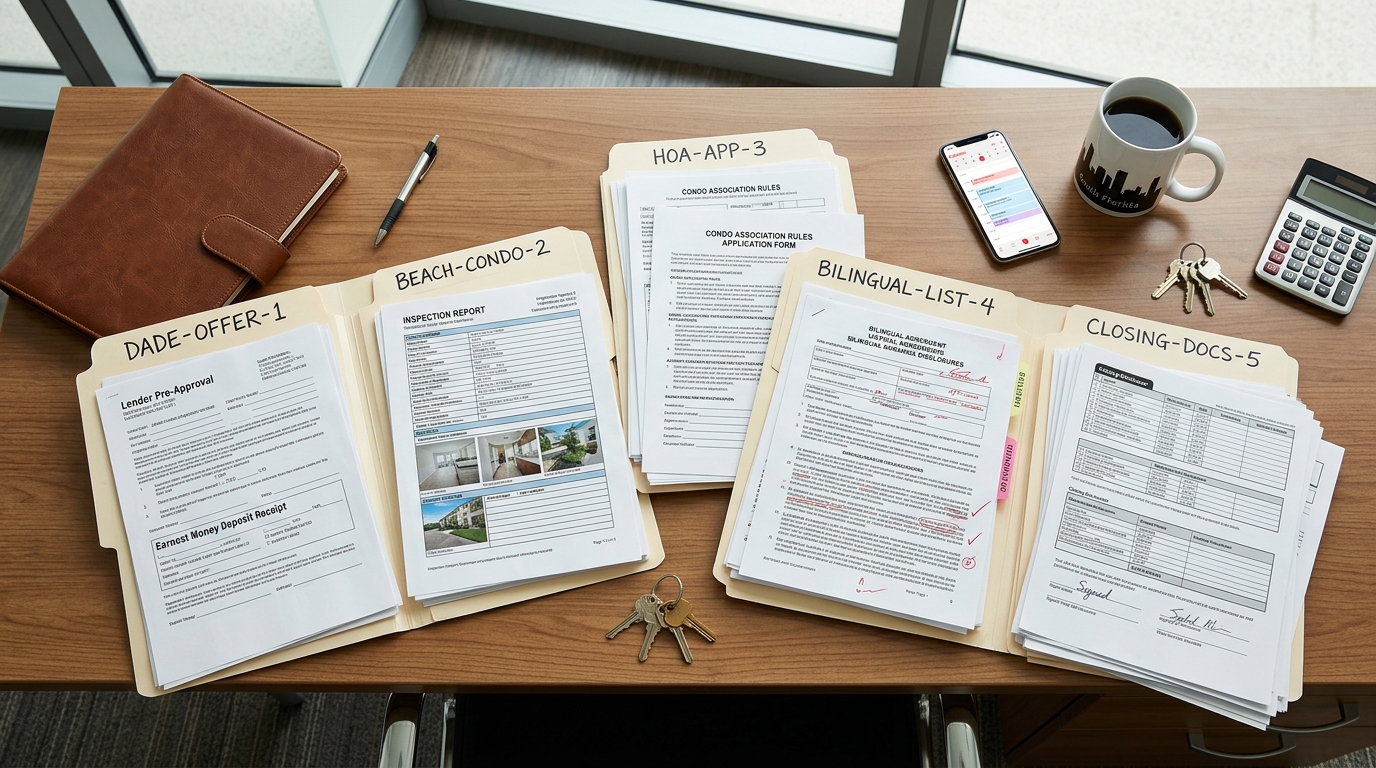

The real problem isn't language — it's being the only bridge
Let's get specific about where bilingual agents actually lose time. It's not the moment you switch to Spanish mid-conversation with a client. That's easy — you've done that your whole life. The problem is every operational touchpoint around that conversation that also needs to happen in two languages.
- A document reminder goes out to your buyer in English because that's what the system defaults to. You rewrite it in Spanish and resend it yourself.
- The title company sends an update. You translate the key points into a WhatsApp message for your client before they panic about something they can't read.
- Your lender needs something from the buyer. You call the buyer, explain in Spanish, then call the lender back and confirm in English.
- A follow-up sequence fires, but the tone is wrong for a Spanish-speaking client who expects warmth, not bullet points. You rewrite it.
None of these tasks show up on a time tracker. None of them are billable. But they add up to hours per deal — hours that English-only agents never spend. We wrote about this compounding cost in detail in our breakdown of the hidden cost of bilingual real estate admin.
The bottleneck isn't that you speak two languages. It's that every system, every vendor, and every workflow assumes you only speak one.
How Reddy knows which language to use — and when
Reddy doesn't ask you to toggle a language setting or maintain two versions of every template. Instead, it works from the client profile. When a contact is set up with a preferred language, every automated touchpoint — follow-ups, reminders, status updates — goes out in that language by default.
That sounds simple, but the details matter. Here's what that actually looks like across a deal:
- Your Spanish-speaking buyer enters the pipeline. Their preferred language is set to Spanish — either by you during intake or based on the language of their first interaction.
- Reddy sends the initial follow-up in Spanish. Not a Google Translate version of the English template — a message written with the right tone, phrasing, and level of formality for the context.
- When it's time to request documents, the reminder goes out in Spanish with clear, plain-language instructions. No legalese, no stiff phrasing that confuses more than it helps.
- Meanwhile, your communication with the title company, lender, and listing agent continues in English. Reddy handles those touchpoints separately, in the language each party expects.
- Status updates to your client — inspection scheduled, appraisal complete, closing date confirmed — go out in Spanish automatically, matched to the deal timeline.
Follow-ups that actually land in Spanish
If you've ever used a CRM that claims to support Spanish, you know the pattern. You get a follow-up template that reads like it was run through a dictionary. The grammar is correct. The meaning is off. And the tone feels like a form letter from a government office.
That doesn't work in real estate. A Spanish-speaking buyer in Doral expects a different register than an English-speaking investor in Brickell. Not just different words — different warmth, different pacing, different assumptions about what needs to be explained and what doesn't.
We covered this in depth in our post on why bilingual follow-up breaks differently than English-only sequences. The short version: Spanish follow-ups need to carry intent, not just information. A reminder about uploading a bank statement should feel like a helpful nudge from someone they trust, not a system notification.
Reddy writes Spanish follow-ups that translate meaning, not just words. That's the difference between a message that gets a response and one that gets ignored.
This is where the capacity shift starts. When your follow-ups actually land — when clients respond on the first message instead of the third — you stop spending your evenings chasing documents. That time comes back to you.
Document reminders across two languages, one timeline
Here's a scenario that plays out on almost every bilingual deal. The title company sends you a checklist of what they need from the buyer. It's in English. Your buyer reads Spanish. So you become the middleman — translating the list, explaining each item, following up when something is still missing, and then confirming back with the title company that it's on the way.
Reddy handles the buyer-facing side of this. When a document is due, the reminder goes to your client in Spanish with a clear explanation of what's needed and why. If they haven't responded, the follow-up nudge goes out in Spanish too — on the timeline the deal requires, not whenever you find ten minutes between showings.
- Pre-approval letter request — sent in Spanish with context about why the lender needs it now.
- Proof of funds reminder — phrased plainly, without financial jargon that doesn't translate well.
- Inspection report follow-up — explaining next steps in the buyer's language before they call you to ask.
- Closing disclosure review nudge — flagging what they should look at, in language they actually understand.
Vendor coordination stays in English — automatically
The other half of the bilingual bottleneck is the vendor side. Your client speaks Spanish, but the lender, title company, inspector, and listing agent all work in English. So every deal has you bouncing between two communication tracks — updating one side about the other, constantly context-switching.
Reddy keeps these tracks separate by default. Vendor-facing updates, scheduling confirmations, and status pings go out in English. Client-facing communication goes in their preferred language. You don't have to manage the split manually.
- Inspection scheduling confirmation goes to the inspector in English and to your buyer in Spanish — same information, different language, same send.
- Lender status updates come to you in English. The translated summary goes to your client without you rewriting it.
- Closing date coordination touches multiple parties. Each one gets the update in the language they operate in.
This isn't glamorous. It's plumbing. But it's the plumbing that currently requires you to be awake, available, and mentally switching languages on every single touchpoint. When the plumbing works without you, you get to actually sell.
What this changes about your deal capacity
Let's be honest about what we're not claiming. Reddy doesn't guarantee you'll close more deals. It doesn't replace your bilingual instincts or your relationships with clients who trust you because you speak their language.
What it does is remove the operational tax that bilingual agents pay on every deal. The double-work. The rewriting. The checking. The mental overhead of running two communication tracks simultaneously while also trying to negotiate, show homes, and prospect.
- Follow-ups go out in the right language without you writing them.
- Document reminders reach your client in Spanish on the deal's timeline, not yours.
- Vendor coordination stays in English without you acting as the translator.
- Status updates keep your client informed between conversations, reducing the 'just checking in' calls that interrupt your day.
- You spend less time on admin per deal, which means you can take on the next deal without burning out.
The agents who benefit most from Reddy aren't the ones who struggle with language. They're the ones who are great at it — and exhausted from being the only person on every deal who can do it.
If you're running eight deals and feel like you're running sixteen, the language layer is probably why. Not because you can't handle it — but because no one else on the deal can, so it all funnels through you. Reddy is built to handle that layer so the funnel opens up.
How to see this working on your actual deals
We can describe the mechanics all day, but the real question is whether it works on your deals — with your client mix, your market, and the specific touchpoints that eat your time.
The fastest way to find out is a short call where we walk through a current deal together. You tell us where the bilingual bottleneck hits hardest, and we show you exactly what Reddy would handle — which messages, in which language, at which points in the timeline.
No pressure, no pitch deck. Just a clear look at whether this solves the specific problem you're dealing with right now.