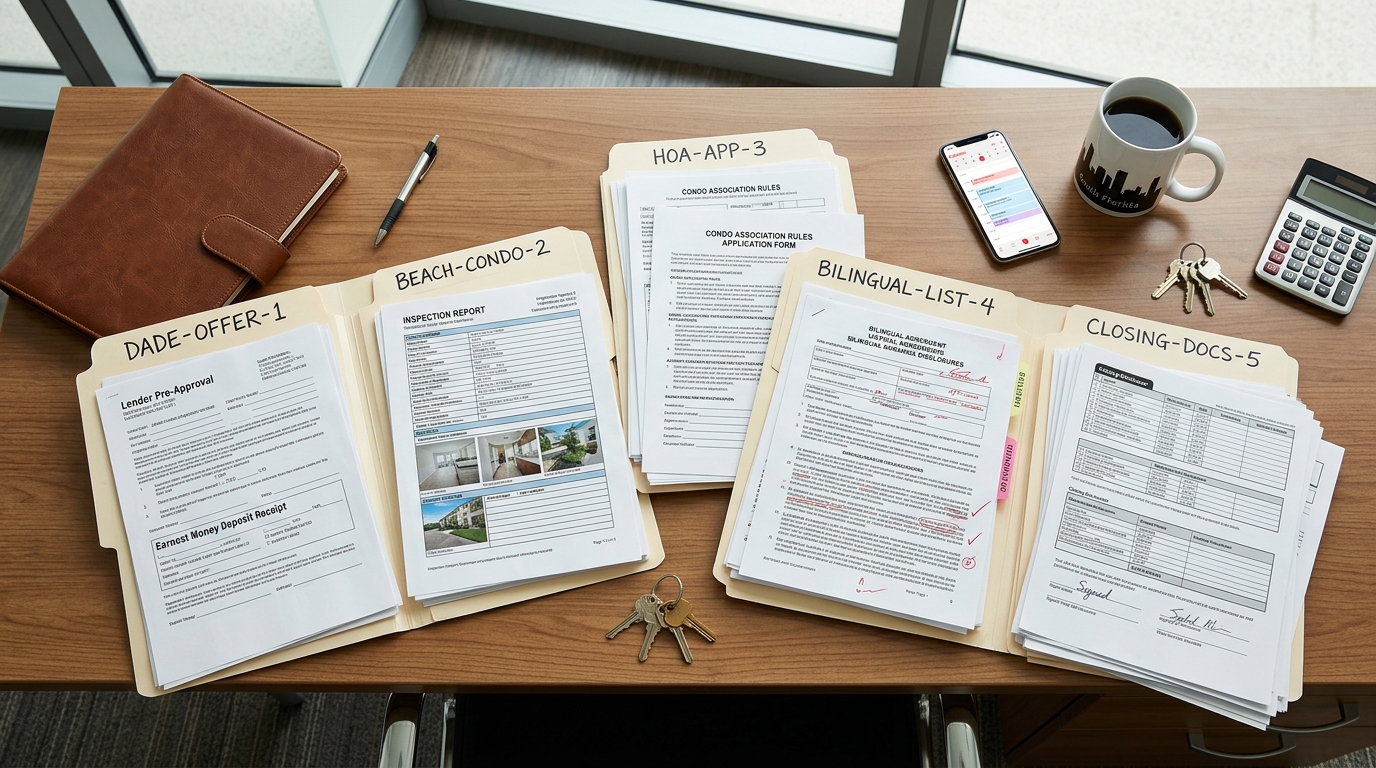

Which new documents does the NAR settlement actually require?
The settlement stemming from the Sitzer/Burnett v. NAR lawsuit created three categories of new paperwork that didn't exist — or weren't mandatory — before August 2024. Every one of them touches the buyer side of the transaction, which is why buyer agents felt the impact hardest.
- Written buyer representation agreement — Required before an agent provides any substantive real estate services to a buyer. Must include a clear, specific compensation term (not open-ended) and an expiration date. This is the big one.
- Touring agreement (showing agreement) — A narrower form required in many markets before an agent can take a buyer on property tours. It's lighter than a full buyer rep agreement but still must disclose how the agent will be compensated.
- Compensation disclosure form — Documents how the buyer's agent will be paid and by whom. Required when compensation comes from the seller, a concession, or a different source than the buyer. Must be presented before the buyer is obligated.
- MLS participant disclosure — Updated MLS policies removed cooperative compensation offers from listing data. Agents must now disclose, separately, that compensation is negotiable and not set by the MLS.
Where each form fits in your deal timeline
The biggest gap we've seen in how agents handle the new paperwork isn't knowledge — it's sequencing. They know the forms exist, but they're unsure exactly when each one needs to be signed relative to the steps they're already running. Here's the timeline mapped to a typical residential buyer transaction.
| Transaction Stage | Required Document | Timing / Trigger |
|---|---|---|
| First buyer contact | Touring agreement | Before the first property showing — even a casual one |
| Buyer commits to working with you | Written buyer representation agreement | Before providing substantive services beyond touring (CMAs, offer strategy, negotiation) |
| Offer preparation | Compensation disclosure form | Before the buyer signs a purchase agreement — must show source and amount of agent pay |
| Offer to closing | Updated disclosure if compensation source changes | Any time the pay structure shifts (e.g., seller concession added mid-negotiation) |
| File compliance / closing | All signed originals in transaction file | Before commission disbursement — broker must have complete audit trail |
If you're juggling multiple deals, this sequencing compounds fast. A missed touring agreement on deal three can void your commission even if deals one and two are airtight. We wrote about how paperwork bottlenecks multiply across concurrent transactions — that problem just got worse with more required documents per file.
State-level differences you need to track
NAR set the floor, but your state real estate commission and local MLS set the actual form templates and enforcement rules. The differences are not trivial. Using the wrong form — or a generic national template when your state has a required version — is one of the fastest ways to create a compliance gap.
| State / Form Body | Buyer Rep Agreement Form | Touring Agreement Required? | Key Nuance |
|---|---|---|---|
| Florida (FAR/BAR) | FAR/BAR Buyer Broker Agreement (revised 2024) | Yes — separate form before showings | Compensation must be a specific dollar amount or percentage, not a range |
| California (DRE / C.A.R.) | C.A.R. Buyer Representation and Broker Compensation Agreement (BRBC) | Yes — integrated into BRBC or standalone | Requires disclosure that compensation is not set by law and is negotiable |
| Texas (TREC) | TREC Buyer/Tenant Representation Agreement (updated) | Not a separate mandatory form; covered within buyer rep agreement | TREC requires the agreement to include an intermediary disclosure for potential dual-agency situations |
Compliance mistakes agents are already making
We've been tracking the patterns agents and team leads mention most when they describe post-settlement paperwork problems. The mistakes cluster around the same handful of gaps — and the consequences are more concrete than a slap on the wrist.
- Skipping the touring agreement for 'quick' showings — An agent takes a buyer to see one property casually, no form signed. If the buyer writes an offer on that property, the agent has no written agreement covering that showing. Commission can be challenged.
- Vague compensation language — Writing 'standard commission' or '2.5–3%' instead of a specific number. The settlement explicitly requires a definite amount. A range does not qualify.
- No expiration date on the buyer rep agreement — Some agents are using open-ended agreements or leaving the date field blank. NAR's practice changes require a clear termination date.
- Failing to update the disclosure when the compensation source changes — Seller adds a concession at negotiation? The buyer needs an updated compensation disclosure before signing the amended purchase agreement.
- No centralized audit trail — Signed forms live in email threads, phone photos, and random Dotloop rooms. When the broker needs to verify compliance at closing, nobody can find page two of the touring agreement.
The real-world cost isn't hypothetical. MLS fines for non-compliance typically range from $500 to $5,000 depending on the board. Unsigned or non-compliant buyer agreements give sellers and buyers grounds to dispute commission at closing. And E&O carriers are paying close attention — missing documents from deals closed after August 2024 are a red flag in claims review. We've covered how missing documents cause closing delays in detail, and the post-settlement forms are now among the most commonly missing.
How to keep the new forms from adding an hour per deal
The paperwork itself isn't optional. But the time it eats is largely a systems problem, not a volume problem. Agents who've built a repeatable process for the new documents report the overhead dropping from 45–60 minutes per transaction to under 15 minutes after the first month.
- Pre-build your signing packets in your transaction platform. Dotloop, SkySlope, and DocuSign all support template workflows. Create a 'First Buyer Contact' packet (touring agreement + compensation disclosure) and a 'Buyer Commitment' packet (full rep agreement). One click, not four.
- Batch the awkward conversation. Don't introduce forms one at a time across three meetings. Explain all the new requirements in your first buyer consultation — what they'll sign, when, and why. Buyers resist less when they see the full picture upfront instead of getting surprised at each stage.
- Set a calendar trigger for expiration dates. Every buyer rep agreement now has a termination date. If you're running six active buyer relationships, that's six ticking clocks. A recurring reminder three days before expiration prevents the scramble.
- Centralize your compliance file from day one. Pick one place — your transaction management platform, a shared drive with a consistent folder structure — and route every signed document there immediately. Do not let touring agreements live only in your email sent folder.
The NAR settlement didn't just add forms — it added decision points, conversation requirements, and audit obligations that stack on top of the paperwork agents were already managing. The agents who are handling it well aren't working harder. They built the system once, templatized the documents, and moved on. The ones still struggling are treating each new form as a one-off task instead of a repeatable workflow step. That's a solvable problem — and it's exactly the kind of operational drag that keeps agents stuck in admin instead of selling.