
The calendar math agents aren't doing
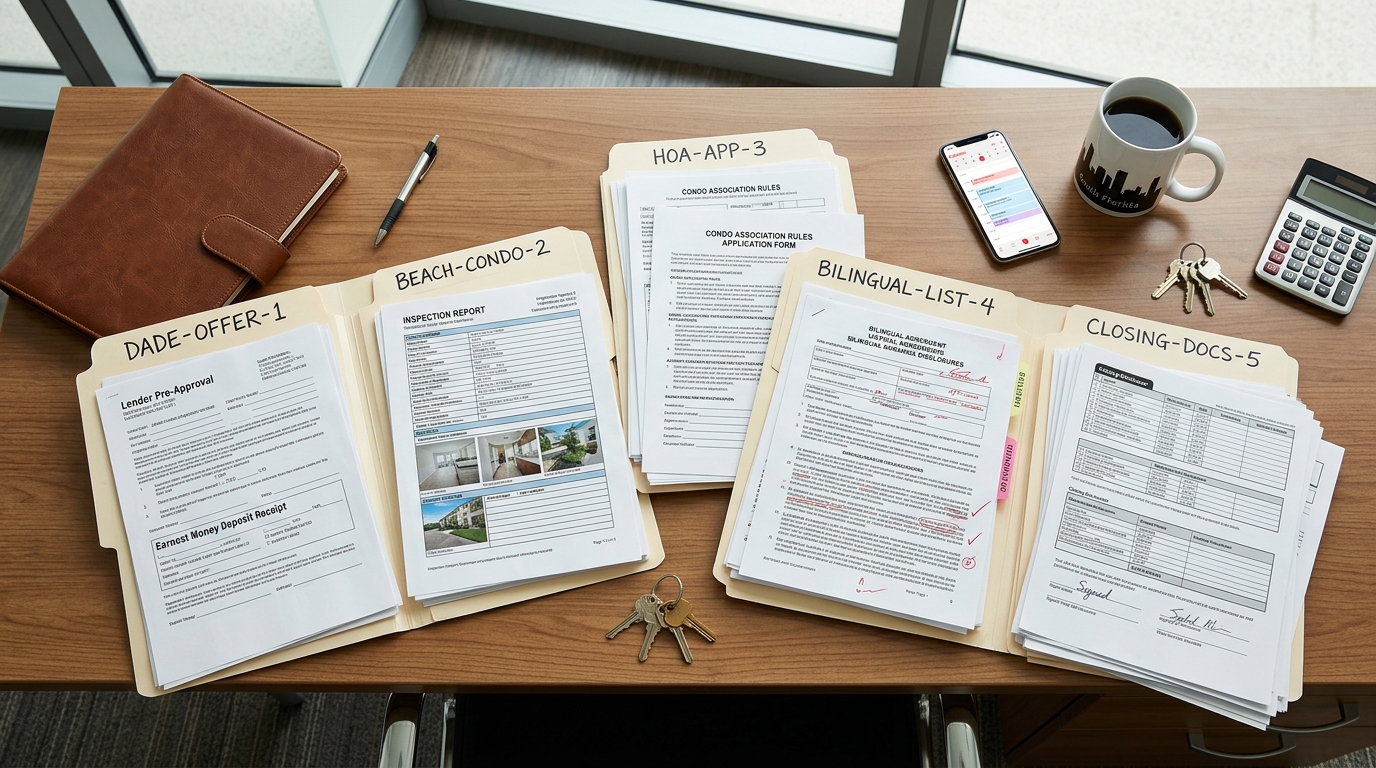
Between Memorial Day and Labor Day 2026 there are roughly 70 business days. Subtract an average of 5 for personal time and holidays, and you're working with about 65. A typical residential deal in most markets takes 30–45 days from contract to close. If you have six transactions overlapping, their admin windows aren't staggered neatly — they're stacked on top of each other across those same 65 days.
This is calendar compression: fewer usable days than the season "feels" like it should contain. Spring deal volume can spread across 80+ business days from March through May. Summer squeezes similar — or higher — volume into a shorter window. The deal count might be the same. The available days to service each deal are not.
And here's what the standard burnout advice misses: the client-facing work (showings, negotiations, calls) doesn't compress much. Buyers still need the same number of showings. Sellers still want weekend open houses. What compresses is the admin — the document chases, the compliance checks, the status updates — because those tasks have soft deadlines that collapse into the same shrinking window.
Admin per deal compounds — it doesn't just add up
When agents talk about being overwhelmed during busy season, they tend to describe it as a volume problem: "I have too many deals." But we've seen something different when we look at where the hours actually go. Admin work per transaction increases as your deal count rises. It doesn't stay flat. Going from 3 active deals to 6 doesn't just double the admin — it roughly triples it, because coordination overhead, context-switching, and error correction multiply.
| Active deals | Estimated admin hrs/week | Selling hrs remaining (50-hr week) |
|---|---|---|
| 2–3 | 8–10 | 40–42 |
| 4–5 | 16–22 | 28–34 |
| 6–8 | 28–38 | 12–22 |
| 9+ | 38+ | Under 12 |
That bottom row is where burnout lives. Not because 9 deals is inherently unmanageable — agents with strong operational systems close that volume regularly — but because the admin load has eaten so far into selling time that the agent is now doing two full-time jobs in the hours meant for one. The fatigue isn't from the deals. It's from the admin hiding inside them.
This compounds further with post-NAR-settlement requirements. The buyer agency agreement changes that rolled out in 2024 added documentation steps at the front of every buy-side transaction. If you're running three buyer deals and three listings simultaneously, that's three additional agreement stages layered onto an admin load that was already nonlinear. We've covered how admin overload scales at every deal count — the summer version just accelerates the curve.
The five admin triggers that compound fastest in summer
Not all admin tasks hit equally under seasonal pressure. Some stay manageable even at high volume. Others spiral. Based on what we've observed working with agents mid-season, these five compound fastest when calendar compression tightens.
- Document chasing across concurrent closings. When you're waiting on lender docs for Deal A, inspection reports for Deal B, and HOA estoppels for Deal C, the mental tracking alone fragments your day. Each follow-up feels small. Together they can consume 60–90 minutes daily.
- Post-closing compliance and file audits. MLS compliance uploads, brokerage file reviews, and commission reconciliation don't disappear after the closing table. They pile up — and summer closings cluster in July and August, creating a backlog that bleeds into fall.
- Status update requests from all parties. Title companies, lenders, co-agents, and clients all want updates on overlapping timelines. When you're juggling six deals, you're fielding 20–30 status pings daily that interrupt selling work.
- Buyer agency agreement prep and documentation since the NAR settlement. Each buy-side deal now requires an additional disclosure conversation, signed agreement, and file documentation before the first showing. In summer's compressed timeline, this front-loads admin onto days already packed with showings.
- CRM hygiene and lead follow-up maintenance. New leads don't pause because you're busy closing. If your CRM (Follow Up Boss, kvCORE, LionDesk — whichever you use) isn't getting updated, your fall pipeline is already decaying while you service summer deals.
The dangerous thing about summer admin isn't any single task. It's that five or six moderate tasks run simultaneously, each demanding a context switch — and the cognitive cost of switching is what actually drains you.
Context-switching is the hidden fatigue multiplier
Research on task-switching shows that shifting between unrelated tasks costs roughly 20–40% of productive time — not because the tasks are hard, but because the brain needs to reload context each time. For a real estate agent in July, a typical morning might look like this: draft a counteroffer, chase a lender for a clear-to-close, update a CRM record, respond to a showing request, upload compliance docs, then return a client call about staging.
That's six context switches before lunch. Each one carries a re-orientation cost. The Maslach Burnout Inventory — the standard framework psychologists use to measure burnout — identifies emotional exhaustion as the first dimension to spike. Context-switching accelerates emotional exhaustion because it prevents the sustained-focus states that actually feel energizing.
This is why the standard advice to "batch your tasks" falls short in summer. You can't batch when four deals need responses in the same two-hour window. What you can do is remove entire task categories from your plate. That's a different intervention than time management — it's load shedding. And there are admin tasks agents should never do themselves, especially under seasonal pressure.
A triage framework: what to shed first
Most burnout advice jumps from "delegate more" to a list of tools without helping you decide what to let go of first. Under summer pressure you need a triage hierarchy — not a shopping list. Here's how to sort your admin tasks into three tiers.
| Tier | Category | Examples | Action |
|---|---|---|---|
| 1 | Revenue-protecting | Lead follow-up, showing prep, offer drafting | Keep — these generate income directly |
| 2 | Compliance-mandatory | File audits, buyer agency docs, MLS uploads, disclosure tracking | Delegate or systematize — must happen, but not by you |
| 3 | Nice-to-have | CRM tag cleanup, social media posting, manual status updates to all parties | Drop or automate — these can wait or be handled by a system |
Most agents under stress default to Tier 3 tasks because they're quick wins that feel like progress. Cleaning up CRM tags at 9 PM feels productive. But it's borrowed time from sleep or recovery — and it's not protecting revenue or keeping you compliant. Tier 2 is the real delegation target: tasks that must happen but don't require your license, your relationships, or your judgment.
Tier 2 is the work an agent hands off: to a TC, to a service like Transactly, or to a tool like Reddy. The question isn't whether to delegate — it's whether you do it before July fatigue calcifies into October attrition, or after.
Summer burnout becomes fall attrition — the timeline agents don't see
Here's the pipeline nobody talks about in burnout content: unaddressed summer exhaustion doesn't resolve when deal volume drops in September. It converts into a fall slump — fewer prospecting calls, slower follow-up, shorter patience with clients. By November, the agent's pipeline has thinned. By January, they're questioning whether to renew their license.
NAR's Member Profile data consistently shows that a significant share of agents who leave the industry within their first three years exit after a busy season, not during it. The burnout itself isn't what makes them quit. It's the empty pipeline that follows, which feels like evidence that the career isn't working — when the real cause was an admin-load problem they never diagnosed.
The decisions you make about your admin load in July don't just determine how you feel in August. They determine whether your Q4 pipeline exists at all.
If you're reading this mid-summer and recognizing the pattern, the intervention is straightforward: identify your Tier 2 admin, move it off your plate this month, and protect the selling hours that build your fall pipeline. The math doesn't require heroics. It requires load shedding before the fatigue compounds further.